

Ladders aren’t just for reaching high shelves anymore. They’ve become one of the most versatile and visually appealing decor elements for living rooms, blending function with aesthetic appeal in ways traditional furniture can’t match. A well-placed ladder, whether rustic wood, sleek metal, or something in between, instantly adds character, draws the eye upward to maximize vertical space, and gives a room that lived-in, curated feel. The beauty of ladder decor is that it works across design styles, fits tight spaces where traditional bookcases won’t, and can be repositioned whenever the mood strikes. Whether you’re looking to display cozy blankets, create a mobile plant display, or showcase a growing book collection, ladder decor offers practical solutions wrapped in genuine style.
Key Takeaways
- Ladder decor ideas for your living room maximize vertical space while adding character without overwhelming the room, making it perfect for apartments and smaller layouts.
- Blanket ladders should be 6 to 8 feet tall, angled at 75 degrees, and styled with 3 to 4 blankets of varying textures and weights for maximum visual interest.
- Plant ladders transform corners into green focal points by positioning shade-tolerant plants like pothos and philodendrons on tiered rungs with proper drainage and light consideration.
- Book-loaded ladders work best when books are grouped in clusters of 3 to 4 per rung with accessories in odd-numbered groupings to create intentional rhythm and prevent clutter.
- Rustic wood ladders complement farmhouse and cottage interiors, while sleek metal ladders suit contemporary spaces; mixing styles often creates fresher, more dynamic results.
- Rotate your ladder decor seasonally and keep heavier items on lower rungs for stability, allowing flexibility and intentional arrangement that keeps your living room feeling curated.
Why Ladders Make Perfect Living Room Decor
Ladders solve a common decorating challenge: how to use vertical space without overwhelming a room. Unlike tall bookshelves that eat up floor space and demand perfect symmetry, leaning ladders feel organic and flexible. They draw the eye upward, making ceilings feel higher and rooms feel larger, especially valuable in apartments or older homes with tighter layouts.
The functional appeal is real too. A ladder gives you accessible storage and display that’s far more intentional than stacking random items on a shelf. Items on a ladder are meant to be seen and appreciated, not hidden away. This naturally encourages owners to be more thoughtful about what goes on display and how it’s arranged.
From a design perspective, ladders work because they’re inherently honest objects. They don’t pretend to be anything but what they are, and that authenticity reads as sophisticated in modern interiors. A wooden ladder against a blank wall is almost a minimalist art installation. Add textiles, plants, or books, and it becomes an anchor point that ties a room together.
Blanket Ladders and Textured Wall Displays
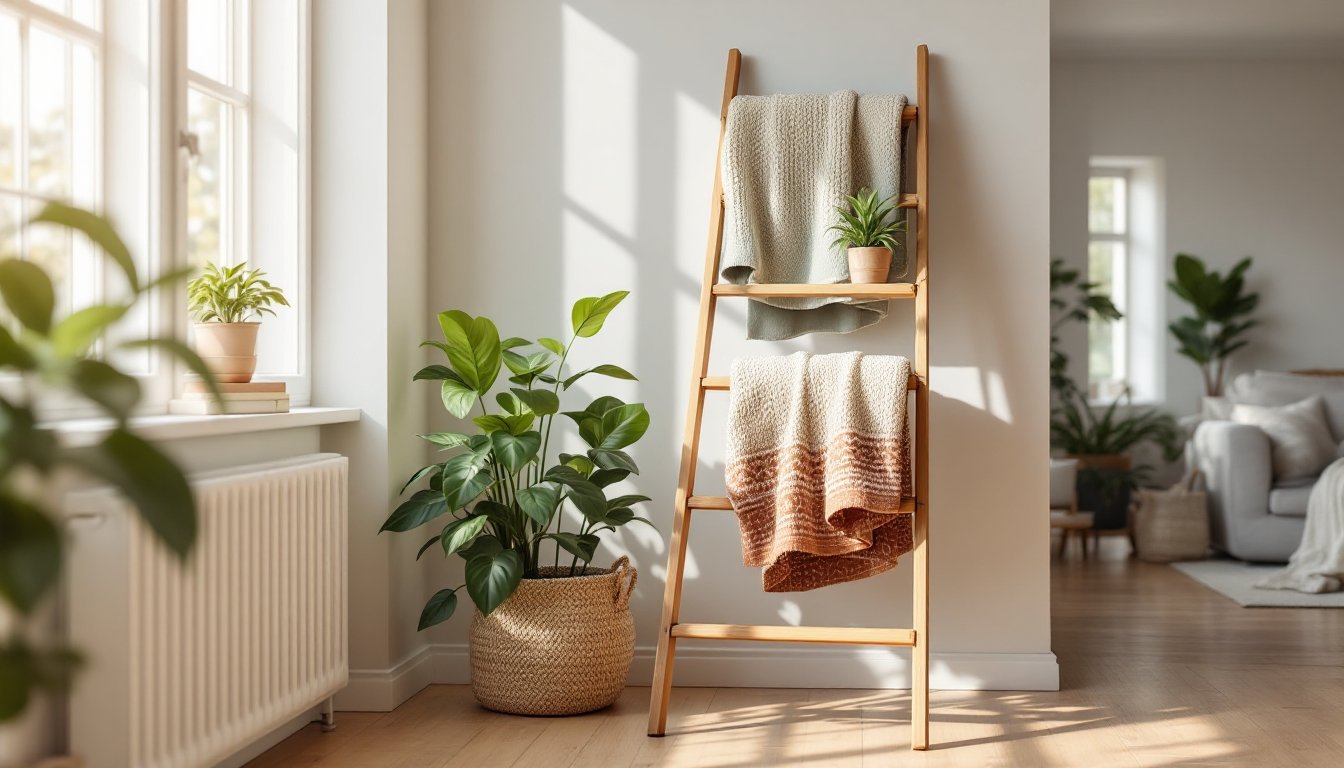
The blanket ladder is the gateway drug to ladder decor, approachable, instantly practical, and genuinely useful. Standard widths range from 24 to 36 inches, so measure your wall space before shopping. A 6 to 8-foot-tall ladder works for most living rooms without looking like a fire hazard.
The setup is straightforward: lean the ladder against a wall (it should sit at roughly a 75-degree angle for stability), then drape throw blankets, quilts, or woven textiles across the rungs. Group 3 to 4 blankets of varying weights and textures, a chunky knit, a lightweight linen, a patterned throw. This layering creates visual interest and keeps the display from feeling sparse.
For maximum impact, choose blankets that complement your room’s color palette. Warm neutrals (cream, tan, gray) work everywhere. If your space leans moody, deep jewel tones or muted greens anchor the look beautifully. Keep one or two rungs partially bare, too much fabric looks cluttered, not curated.
Pro tip: rotate blankets seasonally. Heavy plaids and wools in winter, linen and cotton blends in summer. It’s easy, costs nothing, and keeps your decor feeling fresh without buying new pieces.
Plant Ladders and Vertical Greenery
A plant ladder transforms any corner into a green focal point. The rungs naturally cradle small to medium pots, creating a tiered display that would require multiple shelves in traditional setups. A 4 to 6-foot wooden ladder works best for plant displays, giving plenty of room without dominating the space.
Start with lower-maintenance plants that tolerate indoor light: pothos (also called devil’s ivy), philodendrons, snake plants, or trailing string of pearls. Position taller or trailing plants on upper rungs so they cascade gracefully. Put heavier or slower-growing plants on lower rungs where they’re less likely to be disturbed.
Before assembly, think through watering logistics. Plants on upper rungs will drip onto lower ones, so group thirsty plants separately or use a plant stand with a built-in reservoir tray on the bottom rung to catch overflow. Ensure the ladder sits on a water-resistant surface (concrete, tile, or a protective mat) rather than directly on carpet or hardwood.
Light matters. Ladders positioned near windows let plants thrive and create beautiful shadow patterns on walls. If your living room doesn’t have great natural light, stick with shade-tolerant plants or consider supplemental LED grow lights clipped to the ladder frame itself.
Decorative Leaning Ladders for Books and Accessories
A book-loaded ladder is a statement piece that works in living rooms with literary souls. Use a 5 to 7-foot ladder depending on ceiling height, and arrange books spine-outward on lower rungs with a few laid flat on upper rungs for visual variation. Include objects that break up text density: small framed prints, a decorative sphere, a candle, or a tiny sculpture.
Grouping matters. Instead of random placement, cluster 3 to 4 books per rung, orienting spines in the same direction. Add one or two accessories per section. This creates rhythm and prevents the ladder from looking like an overflow bookshelf.
For a more minimalist take, skip books entirely and use the ladder for a curated accessory display. Vintage bottles, brass candlesticks, small vases, woven baskets, items that tell a story about the room’s aesthetic. Odd numbers rule in styling: display 3 vases, 5 candles, or 7 small plants. It feels more intentional than even groupings.
Keep weight distribution in mind. Heavier items (stacks of books, large sculptures) belong on lower rungs for stability. Upper rungs suit lighter accessories and visual breathers.
Rustic and Farmhouse Ladder Designs
Rustic ladders, typically made from reclaimed wood or distressed finishes, pair beautifully with farmhouse, cottage, and shabby-chic interiors. Look for ladders with visible knots, weathering, or hand-forged hardware. Wooden ladder rungs are often 1.5 to 2 inches thick (actual dimensions), which gives them substantial presence without bulk.
Rustic wood ladders photograph well against whitewashed or raw brick walls. Pair them with white or cream textiles, vintage bottles, and earthy accessories. The contrast between the ladder’s worn patina and fresh, light decor creates an effortlessly lived-in look.
If you can’t find a vintage ladder locally, craft supply and furniture stores stock distressed wooden ladders at reasonable prices. Avoid ultra-new-looking wood treated with heavy stains, authentic rustic appeal comes from genuine aging or light, driftwood-style finishes.
Modern and Contemporary Ladder Styling
Metal ladders, typically aluminum, black steel, or brushed chrome, suit contemporary and industrial spaces. These tend to be slimmer (often 18 to 24 inches wide) and work well in smaller living rooms. Pair metal ladders with monochromatic blankets, sleek glass accessories, and minimalist plant arrangements.
For a hybrid approach, combine a rustic wood ladder with modern accessories, or a metal ladder with textured farmhouse blankets. These contrasts often feel fresher than matching aesthetics throughout.
Conclusion
Ladder decor works because it’s honest, flexible, and genuinely useful. Whether the goal is warmth through draped blankets, greenery through a plant display, or visual interest through books and accessories, a well-chosen ladder adapts to your space and style. The key is intentional placement, thoughtful arrangement, and not overthinking it. Start with one ladder, choose what resonates, blankets, plants, or books, and let it anchor your living room’s personality.