

Living room walls are a blank canvas waiting for personality. Whether someone’s refreshing a dated space or starting from scratch, wall decor sets the tone for the entire room, and it doesn’t require a contractor or a designer’s budget. Hobby Lobby offers an impressive selection of affordable, on-trend wall decor options that work whether someone’s into rustic farmhouse, modern minimalism, or eclectic boho. The key isn’t buying every trendy piece: it’s choosing items that reflect actual living and style. This guide walks through seven proven wall decor ideas using Hobby Lobby’s current inventory, each grounded in practical application rather than Pinterest fantasy.
Key Takeaways
- Hobby Lobby living room wall decor ideas range from rustic shiplap and wood art to modern metal accents, offering affordable options for every style preference.
- Proper planning and measurement—including layout mock-ups and chalk line guides at 57–60 inches from floor—ensure gallery walls and textured hangings look intentional rather than random.
- Wooden pieces should be stained or painted before installation for safety and quality results, and pairing different sizes creates visually curated asymmetry.
- Textured wall hangings and macramé pieces should be at least 24–36 inches wide to avoid looking lost on standard living room walls.
- Layered botanical displays combining real plants with faux stems, or framed botanical art with floating shelves, create depth and coordinate well with multiple décor styles.
- Personalized and statement wall pieces—such as custom canvas prints or oversized monogrammed signs—anchor rooms more effectively than multiple competing focal points and age better than generic trends.
Rustic Wood and Shiplap Wall Art
Wood-based wall art remains the workhorse of farmhouse and rustic living rooms. Hobby Lobby stocks several variations: pre-made shiplap wall panels (typically in 2×4 or 4×8 foot sheets), reclaimed-look wooden signs with routed lettering, and solid wood frames that can be filled with fabric or painted canvas. The appeal is straightforward, wood warms a space instantly and pairs well with virtually any color palette.
For installation, shiplap panels require basic drywall anchors or studs, depending on weight. Most of Hobby Lobby’s pre-made pieces are lightweight enough for heavy-duty drywall anchors rated for 25–50 pounds, though always verify the product weight before hanging. If anchoring to studs, use standard 2.5-inch wood screws. One common mistake: applying stain or sealant after installation. Do that work before mounting, standing on a ladder with a brush isn’t safe or effective.
Budget-conscious builders often paint wooden pieces instead of staining. A quart of primer and two quarts of finish paint covers most accent walls or multiple smaller pieces. The texture of raw wood also catches light differently than painted drywall, adding visual depth without adding much cost. Pairing two or three wooden pieces of different sizes (one large focal point flanked by smaller pieces) creates intentional asymmetry that feels more curated than random clutter.
Gallery Walls and Framed Collections
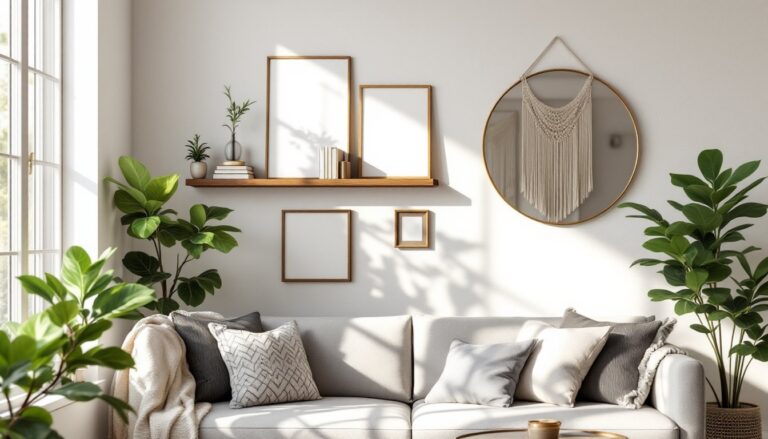
Gallery walls remain popular because they’re genuinely flexible. Hobby Lobby carries an enormous range of frame styles and sizes, from simple black aluminum frames to ornate gold and brass options. The trick isn’t buying a matching set: it’s choosing frames that share either a material, finish, or color family while varying dimensions.
Planning is critical here. Lay all pieces on the floor first, arranged in the final configuration. Measure the wall space, then snap a level chalk line at the height where the center of the bottom row should sit, typically 57–60 inches from the floor to the center of the frames. Use painter’s tape to mark each frame’s position before drilling or hammering. A stud finder saves headaches: many gallery walls mix studs (for heavier pieces) and quality drywall anchors (for lighter frames). Mark studs as vertical lines on the wall in pencil beforehand.
Mix frame sizes, artwork types, and negative space intentionally. A common arrangement uses three large frames as anchors with smaller frames and prints filling gaps, this feels assembled rather than random. Artwork doesn’t have to be expensive: personal photos, printed quote posters, or small original pieces (or even printed artwork from Etsy) fill frames just as well as gallery-quality prints. The frame quality matters more than what’s inside it.
Textured Wall Hangings and Macramé
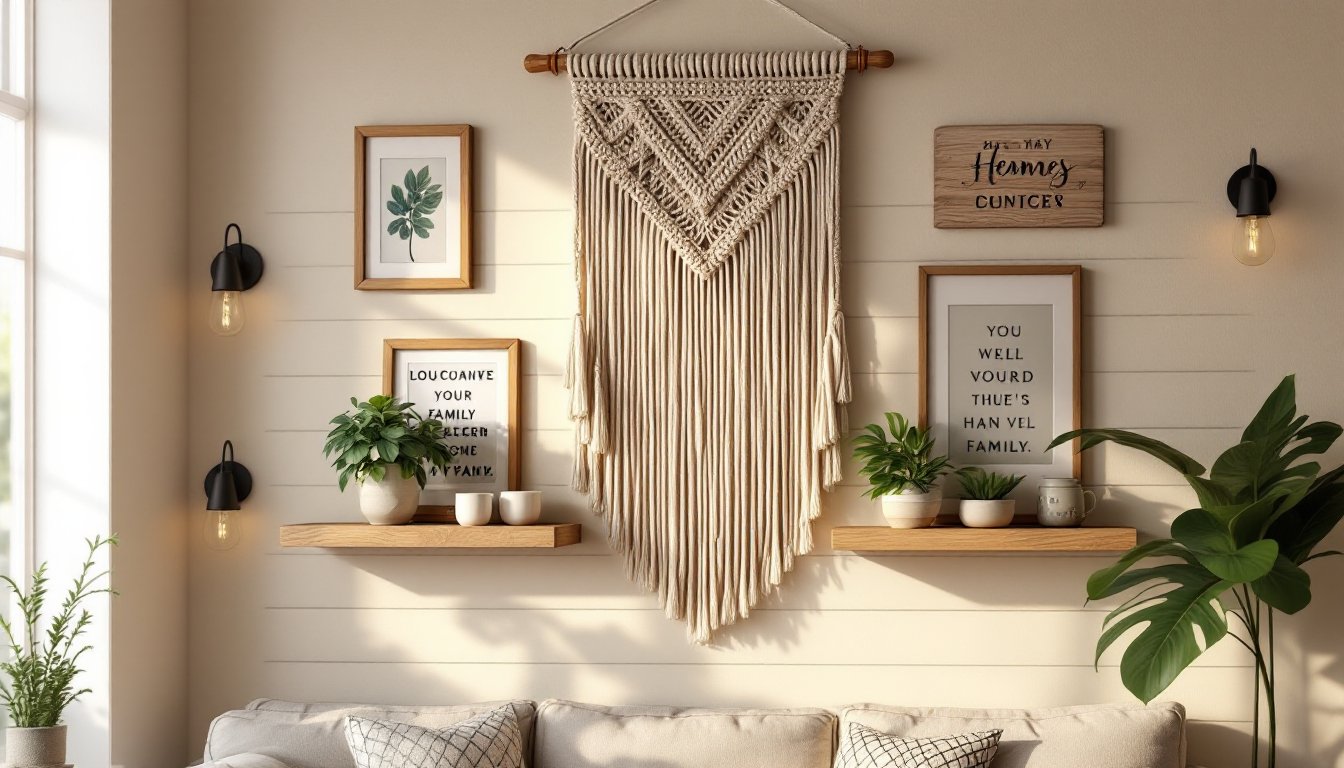
Macramé and woven wall hangings add immediate texture and soften hard wall surfaces. Hobby Lobby’s inventory includes everything from small 12-inch macramé pieces to large 4-foot boho tapestries, plus woven rattan hangings and fringed wall carpets in natural fibers. These pieces work because they introduce a third dimension, actual depth, rather than flatness.
Size matters more here than in other categories. A piece that looks substantial in-store can disappear on a living room wall. For a standard 8-foot ceiling and 10-12 foot wall width, a hanging should be at least 24–36 inches wide. Hanging too small a piece is the most common error: it looks lost and unintentional. A 36-42 inch macramé piece becomes a statement piece: anything smaller should be grouped with other textured elements to avoid sparseness.
Installation is straightforward: most come with mounting hardware. Use studs when possible: if not, toggle bolts or heavy-duty picture hangers handle the load for 5–15 pound hangings. Position the hanging at eye level (57–60 inches to the center), similar to gallery wall logic. Pairing a large macramé piece with smaller wooden shelves or floating shelves below it creates layered interest and functional display space for books, plants, or ceramics.
Botanical and Nature-Inspired Décor
Living walls, both real and faux, drive engagement with wall space. Hobby Lobby carries high-quality faux botanicals: ferns, eucalyptus garlands, flowering branches, and individual plant stems in various lengths. The quality has improved dramatically in recent years: modern faux plants actually fool people at 6 feet away. Real plants offer life and purification, but require maintenance and correct lighting: faux botanicals offer impact with zero watering.
Create layered botanical displays by combining real or faux plants with wooden shelving or hanging planters. A simple approach: install two floating shelves at staggered heights, then fill with a mix of real trailing plants (pothos, string of pearls) and faux flowering stems. The mix of live and artificial plants feels natural rather than obviously fake. For walls without shelf space, hang a faux garland in a gentle curve across the upper third of the wall, anchoring it with small nails or removable adhesive strips.
Botanical wall art, prints, paintings, or pressed botanicals in frames, works solo or as part of a gallery wall. Pairing prints with actual plants creates synergy: the real plants soften the hard edges of frames while the framed art adds geometric structure. Herb-themed art or pressed leaf collections work especially well above a desk or reading area. Botanical themes coordinate easily with other styles, so this approach pairs well with rustic wood, modern metal accents, or eclectic gallery walls.
Metal and Farmhouse Accents
Metal wall décor, steel letters, iron shelving brackets, copper wall sconces, or industrial signage, grounds eclectic spaces. Hobby Lobby stocks black wrought iron, brushed gold, and matte silver finishes, often combining metal with wood or reclaimed-look materials. Metal pieces work as focal points or as supporting accents around other wall elements.
Large metal letters (12–24 inches tall) function like sculpture. A surname or short word becomes a living room anchor, especially when installed over a console table or in a prominent corner. Install letters at least 18 inches from the top of furniture below, this prevents the wall décor from visually crushing the piece it hovers over. Use a level before securing: crooked letters immediately look amateurish.
Farmhouse-style wall sconces combine metal and often include Edison-style bulbs or candle-style arms. These add ambient light and visual interest while serving function. Install sconces symmetrically around a focal wall or fireplace, typically 60–65 inches from the floor. Ensure electrical boxes are in studs or use old-work boxes for drywall installation. If new wiring is needed, hire a licensed electrician, never DIY electrical work unless already trained. Metal shelving brackets (L-brackets in steel or iron) pair with barn wood or reclaimed shelves to create utilitarian storage that looks intentional.
Personalized and Statement Wall Pieces
Custom or personalized wall décor, canvas prints with family photos, monogrammed signs, or name-based art, infuses spaces with genuine character. Hobby Lobby offers printing services (check availability locally) or sells ready-made personalized options like canvas frames, wooden signs with custom lettering, or photo transfer materials for DIY projects. These pieces work because they’re specific to the person living in the space.
Wall decals and vinyl lettering are affordable statement options, though quality varies widely. Premium vinyl adheres cleanly without bubbling and lasts 5+ years: cheap decals peel at corners within months. Application requires patience: map the design position carefully, use a level, and apply slowly with a squeegee tool. Remove the backing in sections, not all at once, or the entire decal shifts. A hairdryer on low heat helps vinyl conform to textured walls.
Statement pieces work best as anchors, one large focal point rather than multiple competing signs. A 3-foot-wide canvas print, oversized framed quote, or custom-lettered wood sign becomes the room’s heart: other wall elements support it rather than compete. Personalized pieces also age well: they’re less trendy than generic motivational art, so they don’t feel dated in two years.
Conclusion
Wall décor is the quickest, most affordable way to transform a living room. Hobby Lobby’s range, from rustic wood to botanical elements, metal accents, and personalized pieces, supports nearly any aesthetic. The key is planning first (measure, mock up, position), prepping surfaces properly, and choosing quality pieces that feel intentional. Install with care, use appropriate hardware for wall type and weight, and step back frequently while arranging. A well-decorated wall doesn’t just fill space: it tells the story of the person living there.