

The wall above a couch is one of the most visible surfaces in a living room, and often the most underutilized. Whether it’s blank drywall or a forgotten spot, that space represents a genuine opportunity to anchor the room’s entire aesthetic. Wall decor above the couch sets the tone for the entire seating area and can elevate a basic living room into a polished, intentional space. The right arrangement draws the eye, complements the furniture below it, and makes the room feel complete. This guide covers practical approaches to selecting, arranging, and hanging wall decor that actually works above a couch, from gallery walls to statement pieces.
Key Takeaways
- Wall decor above a couch anchors your living room design by establishing color palette, creating balance, and making the space feel intentional and complete.
- Choose between a single large statement piece (50–75% of couch width) or a gallery wall with multiple artworks; both approaches work when properly scaled and centered at eye level (57–60 inches from the floor).
- Match your decor style to your room: minimalist design emphasizes a single artwork with breathing room, eclectic style mixes frames and subjects with a consistent color palette, and modern design favors clean lines with bold geometric shapes.
- Plan gallery wall layouts on kraft paper templates and mark nail positions before hanging to avoid guesswork and wall damage—use a level to ensure every frame is straight.
- Select hardware rated for piece weight (use drywall anchors for standard walls, studs for pieces over 20 pounds) and coordinate colors by pulling dominant tones from your couch and supporting accents from the room.
- Proper installation and intentional design choices transform living room wall decor from an afterthought into a polished focal point that reflects your personal style.
Why Above-Couch Wall Decor Matters for Your Living Room Design
The area directly above a couch is arguably the most important real estate in a living room. People naturally gravitate toward seating as the focal point of any space, which means the wall behind it becomes a natural frame for the room. Without intentional decor, that blank wall makes the whole arrangement feel incomplete, as if the designer ran out of ideas. Wall decor above a couch serves multiple functions: it anchors the furniture below, establishes the room’s color palette, and creates a sense of balance and proportion. A living room with thoughtful wall styling feels more curated and intentional, even if the furniture itself is modest. Also, this is often the backdrop for video calls, photos, and everyday moments spent on the couch, so it’s worth treating with care. The décor doesn’t have to be expensive, it needs to be intentional and properly scaled to the wall and furniture dimensions.
Gallery Wall Arrangements That Create Visual Impact
A gallery wall is one of the most flexible approaches to decorating above a couch. It allows flexibility in mixing frame styles, art sizes, and matting while still creating a cohesive look. The key is planning the layout before driving a single nail.
Large Statement Pieces vs. Multiple Smaller Artworks
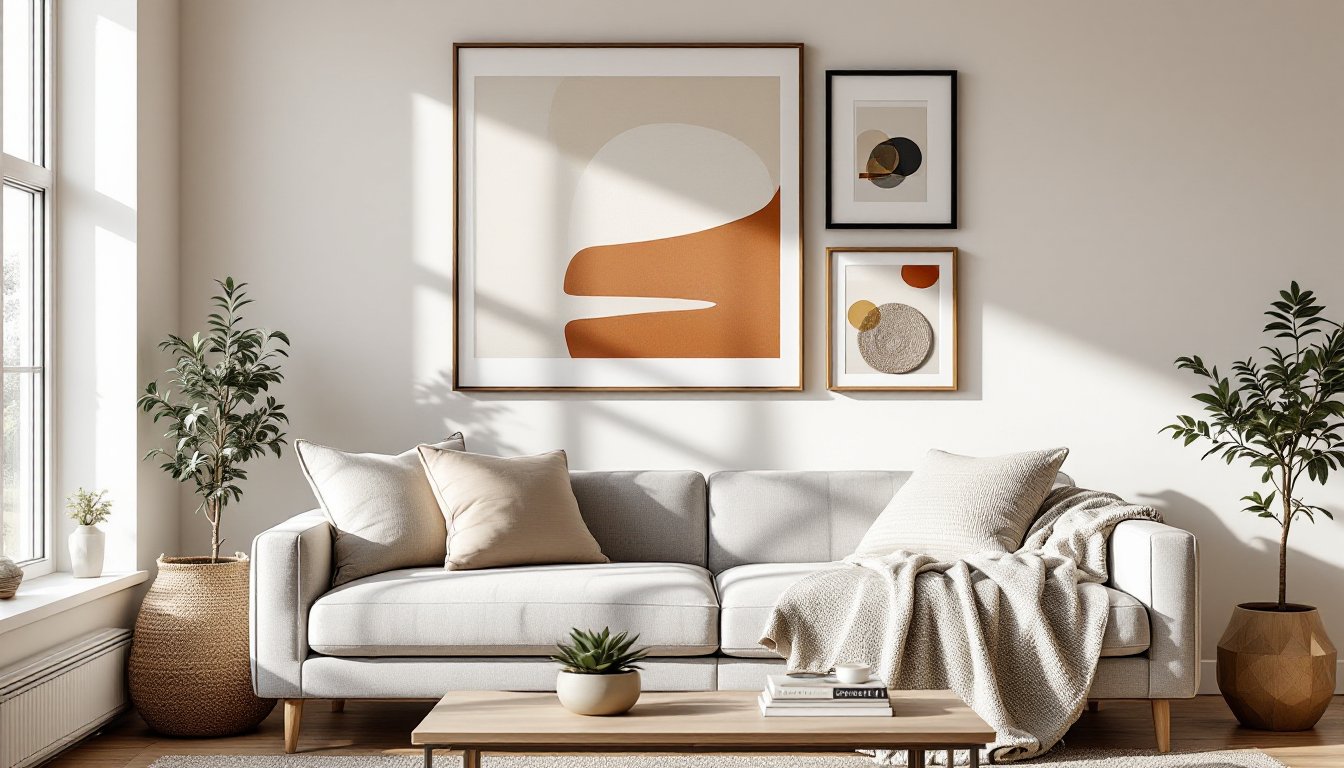
Both approaches work, the choice depends on the wall size and room style. A single large statement piece (think a 48″ × 36″ canvas or a dramatic oversized print) is the simplest approach and works well above a standard sofa. It draws the eye immediately, requires minimal spacing decisions, and suits minimalist or modern interiors. A statement piece should be roughly 50–75% of the couch’s width to feel proportionate.
Multiple smaller artworks create more visual interest and allow for personality expression. A common grid layout uses 4–9 frames in uniform spacing (typically 2–3 inches between frames), while an eclectic salon-style arrangement mixes frame sizes for a collected, curated feel. This approach works exceptionally well in traditional, eclectic, or bohemian spaces. The challenge is getting the layout right: sketch it on kraft paper first, tape the template to the wall, and use painter’s tape to mark nail positions. This prevents guesswork and saves wall repairs.
For either approach, center the arrangement horizontally on the couch. Vertically, hang the grouping so the center of the arrangement is at eye level when seated, roughly 57–60 inches from the floor. This creates a natural sightline and makes the space feel intentional rather than arbitrary.
Choosing the Right Color Palette and Style
The wall decor above a couch should complement the couch and surrounding furniture, not fight for dominance. If the sofa is a bold color or pattern, lighter, neutral artwork prevents visual chaos. A neutral or pale sofa has more flexibility to carry vibrant art or darker tones.
Trending Styles: Minimalist, Eclectic, and Modern Designs
Minimalist design emphasizes breathing room and simple forms. Above a couch, this translates to a single large artwork, maybe a simple black-and-white photograph or a clean abstract piece, often paired with plenty of white wall space. The focus is on quality over quantity. This works best with sparse, uncluttered furniture and a calm color palette.
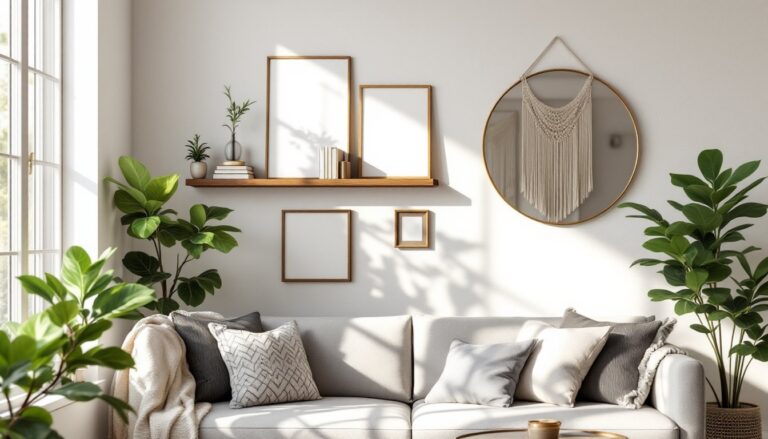
Eclectic style celebrates mixing textures, frames, and subjects. A gallery might combine vintage prints, family photos, woven wall hangings, and small sculptures in different-sized frames. The unifying element is usually a consistent color palette (say, warm neutrals and terracotta) or a deliberate spacing scheme, not matching frames. Eclectic arrangements suit personality-driven spaces and work especially well with vintage or bohemian sofas.
Modern design pulls from contemporary art movements and favors clean lines, often with bold color blocking or geometric shapes. Abstract art, minimalist photography, and sculptural pieces are typical choices. Above a couch, modern arrangements usually feature either a single statement piece or a clean grid of identically framed works.
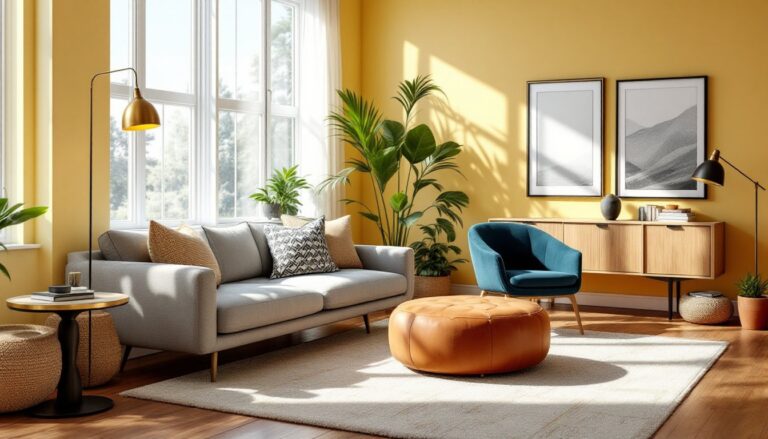
When selecting specific pieces, pull the dominant color from the couch and pull a supporting color from the room’s accents (throw pillows, curtains, rugs). The wall decor should echo, not repeat, these colors. A monochromatic approach, varying shades of one color, is foolproof and feels intentional.
Hanging Techniques and Proper Placement Guidelines
Hanging mistakes are the biggest source of DIY frustration. Proper technique prevents holes, damage, and the temptation to start over.
Start with the right hardware. For drywall (standard in most homes), use drywall anchors rated for the weight of the frame plus artwork. A typical 11″ × 14″ framed print weighs 2–3 pounds: use anchors rated for at least twice that. For plaster or concrete, use plastic anchors or toggle bolts. Studs (the vertical framing behind drywall, spaced 16 inches on center) can hold heavier pieces and should be your first choice for large pieces over 20 pounds. Locate studs with a stud finder, the tool costs $15–30 and saves frustration.
Measure twice, mark once. For a single large piece, find the horizontal center of the couch and mark it on the wall. Measure the frame width, divide by two, and mark that distance left and right of center to find the frame’s center point. For the vertical placement, measure up 57–60 inches from the floor and mark the nail hole position. For gallery walls, use a kraft paper template: lay frames on large paper, arrange them, trace around each frame, tape the template to the wall, and mark nail holes through the paper.
Hang level. A crooked frame immediately signals careless installation. Use a small level (a 2-foot level works fine) to check before fully driving nails home. For gallery walls, check each frame individually and then step back to verify the overall visual balance.
Use picture rail hooks or wire hangers for flexibility. If future adjustments matter, hang frames on wire rather than directly on nails. Picture rails (metal or wood tracks mounted near the ceiling) let frames be repositioned without new holes, though they’re more typical in traditional settings.
Protect the wall. For renters or the indecisive, adhesive picture hangers (rated for appropriate weight) leave minimal damage when removed. They’re slower to adjust but work for pieces under 8 pounds. For heavier pieces or permanent arrangements, traditional nails and anchors are more reliable.
Conclusion
Wall decor above a couch transforms a living room from feeling incomplete to intentional and polished. Whether the choice is a single bold statement piece, a carefully arranged gallery wall, or an eclectic mix of frames, the fundamentals remain the same: proper scale, thoughtful color coordination, and careful installation. Take time to plan the layout, use a template if hanging multiple pieces, and invest in the right hardware. The result is a living room that feels finished, welcoming, and genuinely reflective of its occupant’s style.