

Gothic style transforms a living room from ordinary to unforgettable. Rather than feeling cold or oppressive, a well-designed gothic living room becomes a sophisticated retreat, a space where dramatic aesthetics meet genuine comfort. Whether someone is drawn to Victorian gloom, modern dark academia, or moody maximalism, gothic decor offers flexibility and depth. This guide walks through the specific color choices, furniture selections, lighting strategies, and textile combinations that define compelling gothic living spaces. The goal isn’t to create a dungeon: it’s to craft an intentional, inviting sanctuary that reflects bold personal taste.
Key Takeaways
- Gothic living room decor combines deep blacks and jewel tones with intentional lighting and substantial furniture to create a sophisticated, inviting sanctuary rather than an oppressive space.
- Layer multiple light sources with dimmer switches and warm color temperatures (2200K–2700K) to transform gothic rooms from flat to atmospheric and allow mood adjustment.
- Select high-backed upholstered pieces, dark wood furniture, and statement textiles like velvet and damask to establish gothic character without requiring high budgets or structural renovations.
- Architectural elements such as crown molding and wainscoting define gothic style immediately, but peel-and-stick wallpaper and faux molding offer budget-friendly alternatives with identical visual impact.
- Contrast dark walls with light trim, cream accents, and metallic finishes in antique brass or aged copper to prevent visual monotony and maintain drama with breathability.
- Build your gothic living room in layers starting with wall color and a dominant furniture piece, then add lighting, textiles, and accessories to create a cohesive, personalized retreat that reflects genuine taste and intentionality.
Understanding Gothic Style: The Foundation of Your Dark Aesthetic
Gothic style evolved from medieval architecture and 19th-century romanticism. In modern interiors, it pulls together ornate details, dramatic shadows, and theatrical proportions, but stripped of stuffy museum feeling. Think elaborate crown molding paired with charcoal walls, or a velvet sofa under a statement chandelier.
The core principle: intentionality. Every piece should justify its presence, whether through visual drama, function, or historical nod. Gothic rooms avoid randomness: they follow a cohesive narrative that melds elegance with edge. That means mixing periods (Victorian chairs with contemporary art) and textures (rough stone with soft silk) but maintaining a clear direction.
Gothic doesn’t require wealth or high ceilings. Small apartments and modest budgets can feel gothic through deliberate color, pattern, and lighting choices. Focus on what’s visible and what creates emotional impact, that’s where gothic magic happens. A painted accent wall, a few statement pieces, and layered lighting can shift an entire room’s personality from plain to captivating.
Color Palettes That Define Gothic Living Spaces
Deep Blacks and Rich Jewel Tones
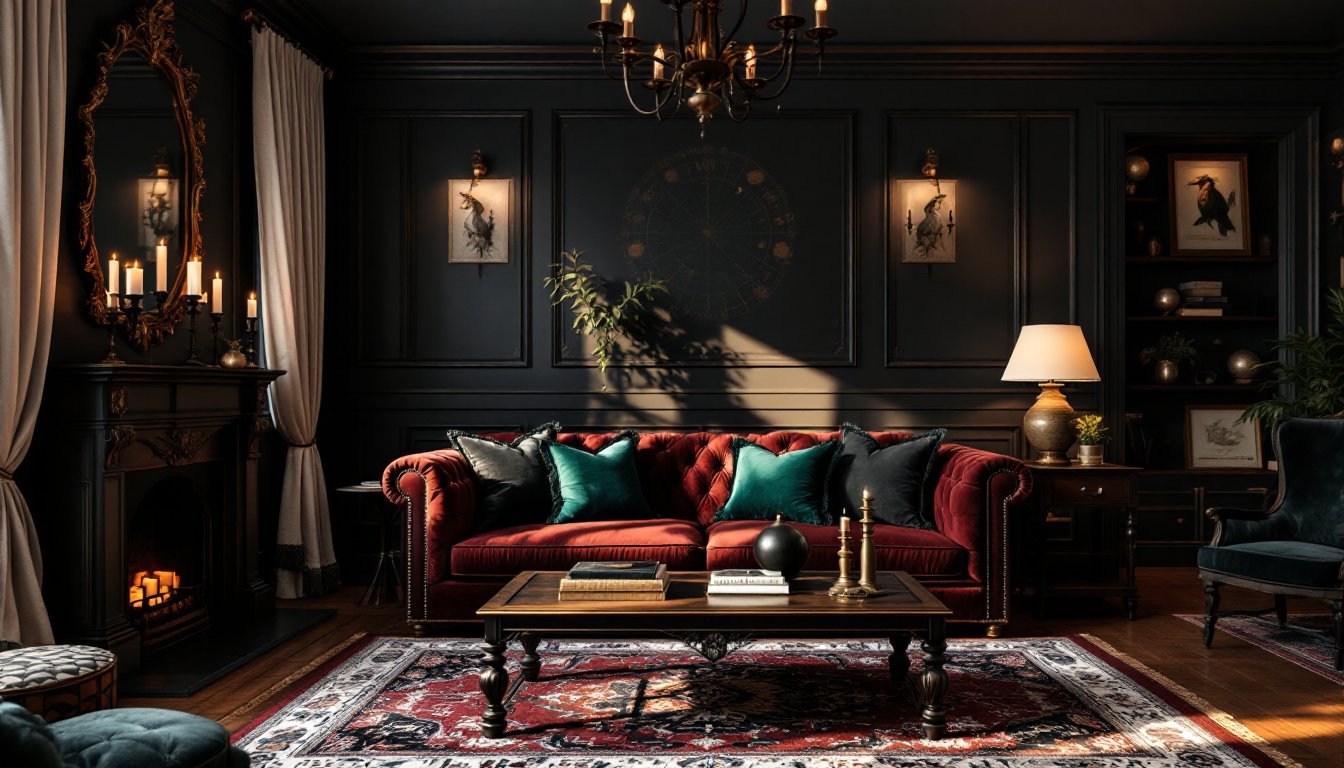
The gothic color foundation rests on darkness paired with richness. Charcoal, deep navy, and true black form the walls and larger furniture pieces. Rather than flat matte, consider slightly textured paint finishes that catch light subtly, this prevents a room from feeling flat or cave-like.
Jewel tones, emerald green, sapphire blue, burgundy, and plum, bring warmth and personality. These aren’t pastels: they’re concentrated, saturated colors that demand attention. A burgundy accent wall behind a bookshelf creates visual depth. Emerald velvet cushions on a dark sofa become focal points without overwhelming the space. Burgundy drapes frame windows dramatically while controlling light.
Pair dark walls with lighter trim or wainscoting to prevent visual monotony and define architectural features. Many gothic rooms use black or charcoal for walls with cream, ivory, or soft gray accents on molding. This contrast keeps the space visually interesting and prevents mood from tipping into depressing.
Metallic Accents and Contrast Elements
Antique brass, aged copper, and gunmetal are gothic staples. These warm metals soften pure black and add richness without brightness. Picture frames, wall sconces, chandelier fixtures, and cabinet hardware all benefit from metallic finishes. Avoid shiny brass or chrome, which reads contemporary rather than gothic.
White and cream accents prevent darkness from overwhelming. Carved plaster details, light-colored artwork mats, cream bookshelves against dark walls, or an ivory throw pillow on a charcoal sofa all provide visual relief. The contrast also makes dark areas feel intentional rather than inevitable. A gothic room with zero light colors often feels like a bunker: the right balance creates drama with breathability.
Essential Furniture and Architectural Features
Furniture selection drives gothic atmosphere. High-backed upholstered pieces, armchairs with nailed trim, sofas with rolled arms, read immediately as gothic. Velvet or leather upholstery in black, burgundy, or deep green feels appropriate: lightweight linen or bright cotton does not.
Woody, dark furniture anchors the space. A heavy wooden coffee table, bookshelves with thick framing, or a substantial side table in walnut or mahogany creates presence and weight. Furniture should feel substantial, never spindly or minimal. Ornate or tufted details add visual complexity.
Architectural elements matter. Crown molding, wainscoting, or a coffered ceiling define gothic character immediately. If structural additions aren’t feasible, temporary solutions exist: peel-and-stick wallpaper designed to mimic wood paneling, faux crown molding trim (paintable foam), or large framed mirrors that create visual depth. These alternatives cost significantly less than real carpentry while maintaining the aesthetic.
Incorporate a fireplace, real or faux. A dark mantel with candlesticks, books, and framed art becomes a natural focal point. A faux fireplace insert (electric or ethanol) functions identically to a real one for a fraction of the cost and requires no venting. Statement rugs with dark bases and intricate patterns ground seating areas and define spaces in open layouts. Layered area rugs in different sizes add dimension.
Lighting Solutions for Moody Ambiance
Lighting transforms gothic rooms from flat to atmospheric. Overhead chandeliers or pendant fixtures, preferably with ornate details or dark metallic finishes, set the tone immediately. Candelabra-style bulbs (E12 or E14 sockets) and warm white (2700K) or extra warm (2200K) color temperatures mimic candlelight and prevent harsh shadows.
Layer lighting strategically. Avoid single overhead fixtures: instead, combine dimmers for ceiling lights with table lamps on dark bases, floor lamps, and wall sconces. Multiple light sources allow mood adjustment: bright for functionality, dimmed for atmosphere. Dimmer switches should be standard on all controllable lights, this single addition dramatically shifts the room’s emotional range.
Candles and candlesticks (real or flameless LED) add authenticity without fire risk. Group them on mantels, side tables, or floating shelves. Black or dark purple candlesticks with ivory or cream candles create contrast and visual interest. Flameless options avoid smell and soot: quality LED candles flicker realistically and cost under $15 per unit.
Avoid recessed ceiling lights, they flatten gothic drama. If they exist, consider covering fixtures with dark trim rings or converting them to warmer color temperatures. Exposed Edison-style bulbs in dark metal fixtures work beautifully in gothic spaces. String uplighting behind furniture or shelving adds depth and prevents the room from reading as a single-color box.
Textiles, Patterns, and Decorative Accessories
Textiles carry massive visual and tactile weight in gothic interiors. Heavy velvet, damask, jacquard, and brocade fabrics drape beautifully and feel luxurious. Curtains should pool slightly on the floor (a theatrical touch) rather than hang precisely. Layer sheers under heavier drapes to control light while maintaining drama.
Throw pillows in various textures, crushed velvet, silk, wool, and lace, make seating inviting and break up solid colors. Mix patterns (damask with solid, stripes with florals) but keep a coherent color story. Tassels, fringe, and beaded trim add ornamental detail without excess. A single embellished pillow on a plain sofa shifts the entire vibe.
Area rugs define spaces and add warmth underfoot. Persian, Turkish, or Victorian-style rugs with intricate patterns in dark reds, blacks, and creams are ideal. They layer beautifully and add historical authenticity. A 5×8 rug anchors a living room seating area: runners extend the effect down hallways.
Decorative accessories populate shelves, mantels, and surfaces. Books with dark spines, framed botanical prints, vintage mirrors with ornate frames, antique candlesticks, globes, taxidermy (real or artful reproductions), and occult-inspired art (astrology charts, moon phase drawings, botanical engravings) feel appropriately gothic without kitsch. Antique or vintage finds from thrift stores, estate sales, and online marketplaces cost far less than new décor and feel more authentic. Cluster items in odd numbers (three candlesticks, five books stacked sideways) rather than spreading them thinly.
Bringing Your Gothic Living Room Vision to Life
Building a gothic living room happens in layers, not overnight. Start with a color decision, select your wall color and dominant furniture piece first, then build from there. Lighting, textiles, and accessories follow naturally once the foundation anchors the space. The result isn’t a museum display or costume shop: it’s a sophisticated, intentional environment that feels both dramatic and livable. Dark walls and moody lighting should welcome rather than intimidate. A gothic room becomes a sanctuary precisely because it reflects deliberate choices and genuine personality.