

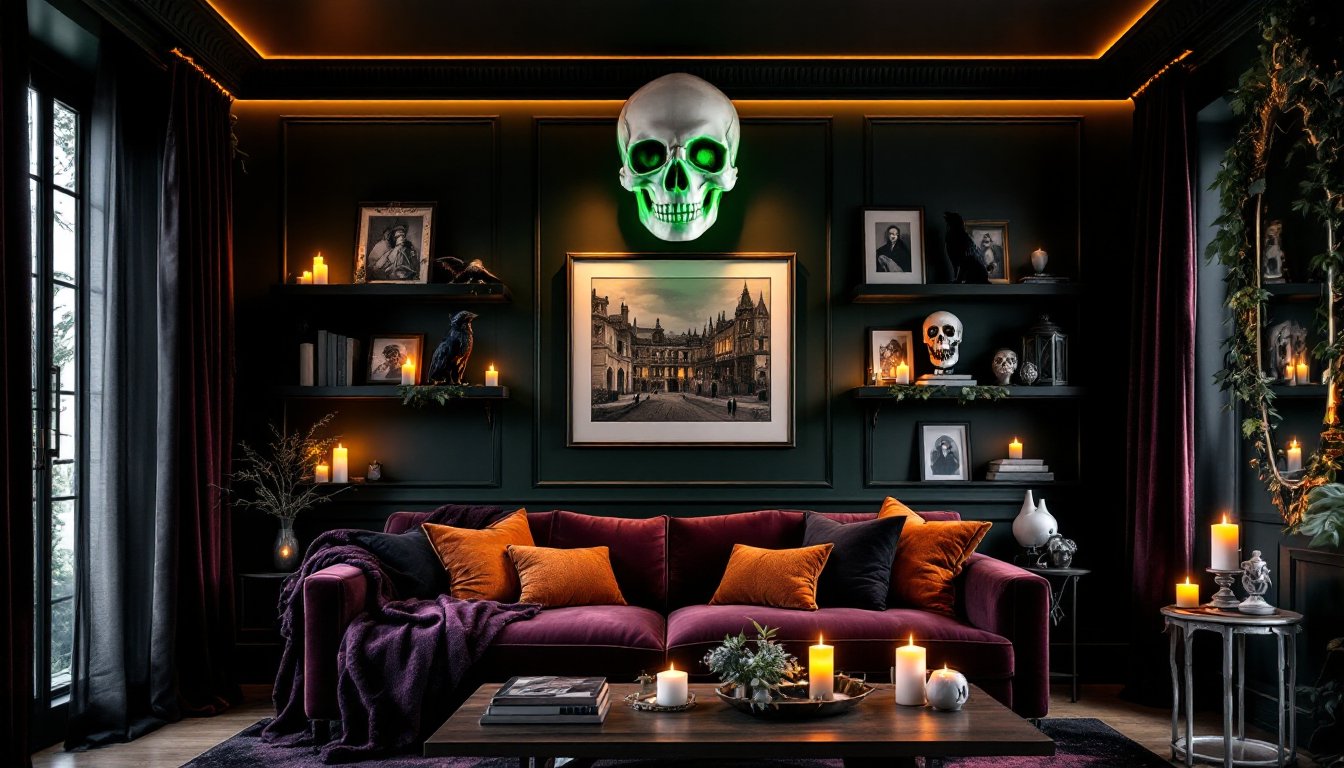
Halloween decor doesn’t have to mean piling plastic skeletons in every corner. A well-decorated living room becomes an immersive experience that sets the mood without looking tacky. Whether hosting a gathering or simply soaking in the season, the right combination of lighting, color, and thoughtful details transforms a ordinary living space into something genuinely atmospheric. The key is layering elements strategically, mood lighting, a cohesive color palette, statement pieces, and subtle touches throughout. This approach delivers impact while keeping the room functional and inviting. The result? A living room that feels intentionally spooky rather than overdone.
Key Takeaways
- Halloween living room decor thrives on strategic layering of mood lighting, color, and statement pieces rather than cluttering every corner with plastic decorations.
- Atmospheric lighting is the foundation—use warm-toned bulbs (2700K), dimmers, and LED string lights to create ambiance, while avoiding harsh overhead lights and fatiguing strobing effects.
- Apply the 60-30-10 color rule to keep your living room balanced: let one dominant color (usually existing walls) fill 60%, introduce a secondary color at 30%, and add a 10% accent pop.
- Anchor your space with one focal statement piece at or above eye level, such as an oversized skull, life-size skeleton, or DIY haunted gallery wall, then arrange all other elements around it.
- Layer textiles like throw blankets, velvet pillows, and sheer curtains to add texture and warmth while maintaining the room’s functionality and ease of transition back after Halloween.
- Create rhythm through subtle details—scattered candles, faux ivy garlands, small figurines, and printable wall art—that reward discovery without overwhelming the space or requiring a large budget.
Set The Mood With Atmospheric Lighting
Lighting makes or breaks a Halloween room. Standard bright overhead lights kill any spooky atmosphere instantly, so the first step is dimming or replacing them. Installing a dimmer switch on existing fixtures gives maximum control, bright enough to navigate safely, dim enough to feel eerie. If hardwiring isn’t in the cards, plug-in dimmers designed for standard bulbs work well.
Warm-toned bulbs (2700K color temperature) feel cozy and mysterious, while cool-toned lights (4000K+) lean creepy. Mixing the two creates depth. Battery-operated LED string lights draped along shelves, mantels, or the back of furniture add ambient glow without clutter. Look for orange, purple, or white options.
Accent lighting directs focus. Desk lamps with orange or red shades, clip lamps hidden behind a statement decoration, or spotlight-style fixtures pointing at a focal wall create drama. A black light hidden behind furniture or in a corner brings out neon or glow-in-the-dark accents for an ultra-atmospheric effect. Uplighting, shining light upward from floor level, makes rooms feel taller and more theatrical.
Avoid flashing or strobing effects in main living spaces: they’re fatiguing and make conversations hard. Reserve those for an entryway or outside. Smart bulbs let you program color changes throughout the season, but standard warm LEDs in various placements often feel more intentional.
Color Schemes That Scream Halloween
Classic orange-and-black feels expected: the trick is using shades and proportions strategically. Deep forest green, burgundy, and charcoal offer sophistication alongside traditional Halloween hues. A living room painted entirely in orange reads as costume: a black wall with orange accents and natural wood feels intentional.
Consider the room’s existing palette. If walls are neutral (beige, gray, white), orange and purple pops cleanly against them. If walls are already bold, stick to two accent colors and let the space breathe. Introduce color through swaps that don’t require paint: throw pillows, artwork, a temporary accent wall using removable wallpaper or fabric draping, or even rearranged furniture groupings.
Dark purple and deep crimson pair beautifully with gold accents for an upscale haunted-mansion vibe. Black and white with grey tones creates a classic gothic feel. Avoid color-washing entire rooms with hot neon orange or lime green, these fatigue eyes and date quickly once November arrives.
Use a 60-30-10 rule: let one color (usually the existing wall tone) dominate at 60%, introduce a secondary color at 30%, and add a pop accent at 10%. This keeps the room feeling balanced rather than overwhelming. Textiles, artwork, and removable décor carry most of the seasonal color, so the room reverts easily after the holiday.
Statement Decorations To Build Your Centerpiece
One focal point anchors the whole room. A large skull decoration (life-size or oversized, mounted above the sofa or on a prominent wall), a floor-standing skeleton frame, a vintage apothecary cabinet filled with potion bottles, or even a DIY haunted mirror becomes the anchor around which everything else arranges.
Large decorations should sit at or above eye level when seated, that’s the natural line of sight. A 5-foot skeleton standing in a corner works harder than a 2-foot version on a low shelf. If mounting isn’t permanent, use removable adhesive strips rated for the weight, or lean items against walls for visual weight without installation.
Statement pieces needn’t be store-bought. A DIY haunted gallery wall (black frames mixing family photos with printed Halloween prints, creepy portraits, or architectural prints of old mansions) costs little and feels curated. Drape sheer black or deep orange fabric behind floating shelves to create depth and shadow play.
A large lantern or candle grouping clustered on a coffee table or side table serves as a functional centerpiece, real candles (flameless for safety) provide that essential flicker. Group odd numbers (three, five, seven) for better visual balance than even counts. Keep the room’s function in mind: if people will sit and chat, don’t place the statement piece where guests will crane their necks.
Incorporate Textiles For Layered Texture
Throw blankets, pillows, and drapes add texture and warmth while masking the room’s bones during a holiday transition. Swap summer fabrics for heavyweight weaves, velvet, or wool blends in deep tones. Layer a burgundy or purple throw over the back of a sofa alongside an orange accent pillow and a black-patterned pillow for depth without chaos.
Curtains matter more than realized. Sheer black or deep orange panels filtering daylight instantly shift the room’s tone. If you can’t swap full curtains, fabric temporary adhesive strips hold lightweight overlays on existing rods without damage. Heavy velvet or brocade-patterned panels feel opulent: semi-transparent options let light filter through mysteriously.
Area rugs in black, deep purple, or textured patterns anchor seating zones and define spaces. Don’t feel obligated to match, slightly clashing textures (a chunky knit throw over smooth velvet) create intentional visual interest. Table runners in complementary colors protect surfaces while adding color and pattern. Layering textiles also muffles sound, making the room feel cozier.
Wash and test all textiles before hanging or draping. Synthetic fabrics can fade under certain lighting: natural fibers breathe better. An oversized throw tacked loosely above a window or bunched into a corner creates shadow and silhouette, easier than full drapery changes and fully removable.
Add Subtle Spooky Details Throughout
Grand statements get attention, but small details make people pause and smile, a detail tucked behind a lamp, a unexpected touch on a shelf. Faux ivy or botanical garlands (greenery-and-bone options look upscale) draped along bookshelves, around doorways, or loose on a mantel add organic texture. They dust easily and pack away small.
Candles in various heights, real or flameless LED, scattered on tables, shelves, and corners (away from traffic paths) create flicker and shadow without clutter. Group them in odd numbers and vary heights. Scents like clove, cinnamon, or pumpkin reinforce the season: unscented or subtle options avoid overwhelming guests with competing odors.
Small figurines, a ceramic cat, a skeleton hand holding a cocktail, a crow perched on a picture frame, reward close inspection. Bookshelf styling with these details mixed between books feels collected rather than decorated. A faux raven tucked on a shelf or hung near a light fixture adds personality without taking up floor space.
Swap out throw pillow covers, update wall art with printable Halloween prints in simple frames, or add a string of small fabric bats above a doorway. These changes cost under $20 total and pack away in a small box. The goal is creating a rhythm of discovery, someone notices something new each time they glance around the room. Avoid oversaturating every surface: negative space lets details breathe and prevents the room from reading as “haunted junk pile.”
Budget-Friendly Tips For Maximum Impact
Big-budget decor shops sell expensive seasonal items that sit in storage the rest of the year. Sourcing thoughtfully stretches dollars. Thrift stores and estate sales stock vintage items, frames, mirrors, candlesticks, apothecary jars, that feel authentically aged and cost a fraction of new decor. A cracked mirror or ornate frame gains character rather than losing it.
DIY projects pay dividends. Draping dark fabric over furniture corners, leaning artwork against walls instead of hanging, or grouping candles at varying heights requires zero tools or permanent changes. Printable downloads (search “Halloween printables” or “spooky wall art”) cost $3–5 and print at home on cardstock: frame them in existing frames already on walls. This rotation keeps visual interest fresh without buying frames.
Paint is cheap labor. A can of black or deep orange spray paint ($8–10) transforms plastic store-bought decorations, old wood frames, or even terracotta pots into custom pieces. Test spray paint on cardboard first to confirm coverage and finish. A makeup kit (face paint, fake blood, black eyeliner) borrowed from Halloween costumes creates graphic details on glass or fabric.
Nature provides free texture: twigs bundled in vases, fallen branches arranged in corners, dried leaves scattered on shelves, or black feathers tucked into arrangements cost nothing and feel genuinely eerie. Layering inexpensive basics (black fabric, string lights, candlesticks) creates depth that expensive single pieces cannot match. The magic is in combination and placement, not price tags. A room layered with $100 of mixed sources outperforms one dominated by one $300 item.
Conclusion
A spooky living room isn’t about stuffing it with products: it’s about intentional layering of mood, color, statement pieces, and details. Start with lighting to set the foundation, anchor the space with one focal point, then build texture and tone through textiles and accessories. The details, scattered candles, unexpected figurines, subtle touches, reward exploration and make the room feel thoughtfully decorated rather than slapped together. Best part? Most of these changes cost little, reverse completely, and store compactly. This Halloween, transform the living room into a genuinely atmospheric gathering space that lasts from September through October.