

A coffee table tray does more than hold remotes and coasters, it’s the anchor point for your living room’s visual rhythm. Whether styled minimally or layered richly, tray decor signals intent and draws the eye inward. The best trays work like a frame within the room, curating what deserves attention and creating breathing room around everything else. In 2026, smart tray styling balances function with aesthetics, turning a practical catch-all into a design statement. This guide walks through concrete tray decor ideas that work for any aesthetic, from sparse modern to textured traditional.
Key Takeaways
- A coffee table tray acts as a visual anchor and frames what deserves attention in your living room, transforming scattered items into a curated design statement.
- Tray decor ideas work best when you balance function with aesthetics—use trays to group objects, protect surfaces, and create visual layers without clutter.
- Minimalist tray styling demands restraint with three to five objects and plenty of negative space, while layered arrangements build interest through height variation and intentional material mixing.
- Seasonal tray arrangements keep your living room fresh by rotating accents every three months, shifting from light spring palettes to cozy fall and winter tones.
- Functional tray organization hides remotes and cables in boxes while keeping decorative items visible, preventing your styled tray from looking like a cluttered catch-all.
Why Coffee Table Trays Transform Your Living Room
A tray serves one core function: it groups objects so they don’t scatter visually across the table surface. Without one, a coffee table looks chaotic, remote here, book there, candle somewhere else. With a tray, those same items become curated and intentional.
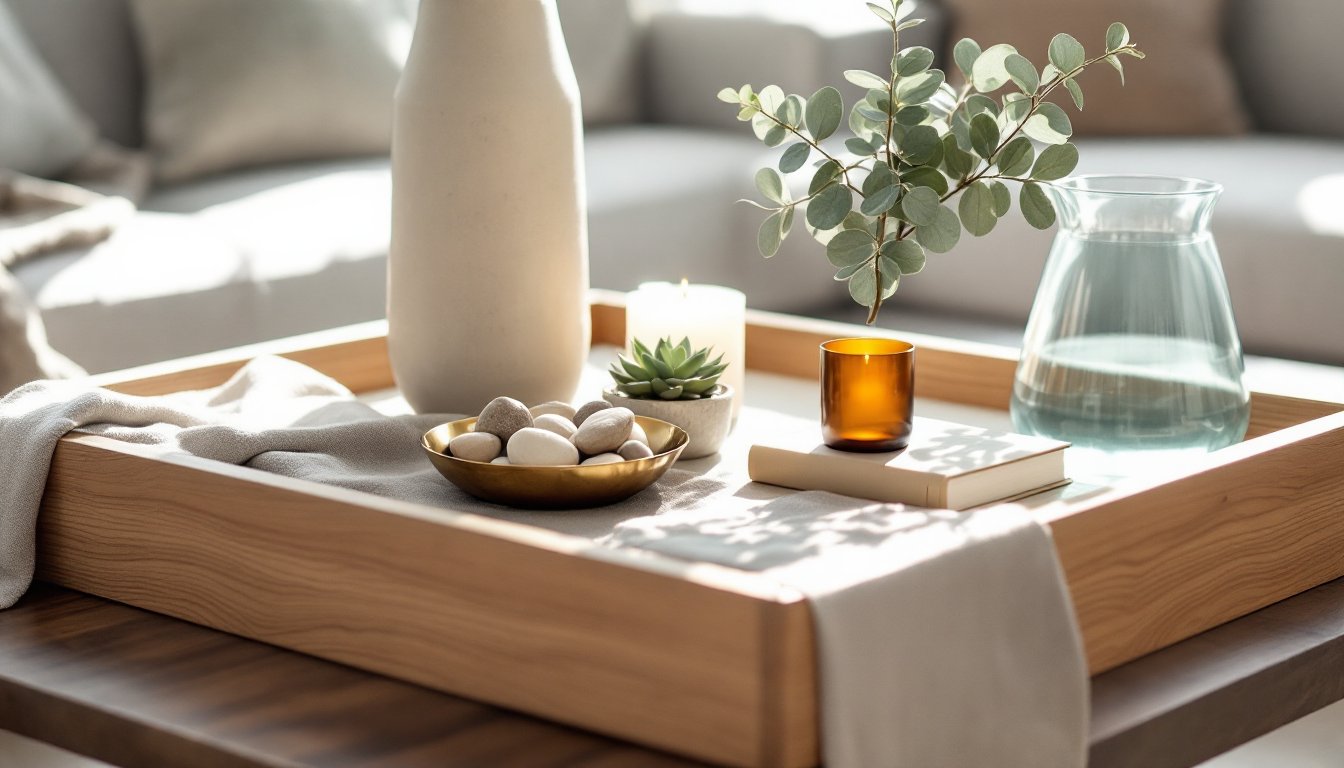
Trays also create layering opportunities. They add a design plane between the table and décor, allowing you to mix textures, heights, and materials without the table feeling cluttered. A wooden tray under a glass decanter, ceramic vessel, and folded linen creates visual separation and balance.
From a practical standpoint, trays contain spills and protect the table surface. They’re movable, so you can shift the whole arrangement for entertaining or cleaning. They also make it easy to reset your living room in minutes, pick up the tray, wipe the table, reset everything. That flexibility keeps styling fresh without major effort.
Minimalist Tray Styling for Clean, Modern Spaces
Less is harder than more. Minimalist tray styling demands restraint, typically three to five objects, lots of negative space, and a single color or material family.
Start with a neutral wooden or concrete tray as your base. Add one statement piece: a tall, sculptural vessel or single stem in a bud vase. Place a neatly stacked deck of art books (two to three, spines aligned) on one side. Leave the rest empty. This approach creates breathing room and makes each object matter.
Another minimal setup uses color blocking, a white ceramic tray holding a dark ceramic bowl filled with smooth stones, paired with a single white candle. The simplicity draws attention to texture and form rather than visual noise.
For tech-heavy living rooms, minimize visible remotes by tucking them in a small wooden or fabric box placed on the tray’s corner. Keep cords behind the table. One decorative object, perhaps a small plant or sculptural object, balances function with aesthetic intent. The key is white space: if it looks crowded, remove something.
Layered Tray Decor for Texture and Visual Depth
Layered styling builds interest through height variation and material mix. Start with a base layer, a linen or linen-blend runner placed diagonally across the tray adds immediate texture and visual softness.
On top of that, position objects at different heights. A tall glass or ceramic vessel creates vertical interest: place it slightly off-center. In front, nest smaller items: a shallow brass or ceramic dish holding decorative objects like smooth stones, dried botanicals, or jewelry. Beside that, stack two to three hardcover books spine-out (the spines should coordinate in color). This trio of heights prevents a flat, two-dimensional look.
Mix finishes intentionally. Pair matte ceramic with polished brass, woven textures with smooth glass. Include one natural element, a small potted succulent or fresh eucalyptus branch in a bud vase. The mix of matte, glossy, woven, and organic creates visual rhythm.
Final touch: drape a lightweight silk or cotton scarf over one corner for organic movement. The layering should feel curated, not haphazard, each piece has visual weight and purpose.
Seasonal Tray Arrangements to Refresh Your Décor
Seasonal styling keeps your tray feeling intentional and fresh without overhauling the entire room. Switch out small accents every three months to align with your environment.
Spring and Summer Themes
Spring trays breathe lightness. Swap in pale linen runners, add potted herbs or succulents, and include fresh-cut flowers in a small vase, think ranunculus or garden roses. Place a lightweight brass or ceramic dish as a catchall for small items. Summer amps up the vibe: incorporate woven placemats or natural jute accents, lighter woods, and pale blues or greens. A small stack of summer reads (magazines or paperbacks) and a glass water pitcher or ceramic vessel in cooling tones feel seasonal without overdoing it. Keep the palette light and airy, avoid heavy textiles or dark wood tones.
Fall and Winter Styling
Fall calls for **warm metallics, copper or bronze accents, **, amber or rust-toned ceramics, and dried botanicals like pampas grass or wheat. Layer a deep burgundy or forest-green linen runner. Include candles in fall scents (cinnamon, clove) in warm-toned holders. Winter goes warmer and cozier: add chunky knit or wool textures, rich chocolate or jewel-toned trays, and metallic accents in gold or warm bronze. Group pillar candles of varying heights (use unscented candles to avoid competing smells), add a small wooden box for storage, and include thick linen or felt runners. The mood shifts from airy to grounded without major expense or effort.
Functional and Beautiful Tray Organization Tips
A beautiful tray fails if it can’t handle daily living. Build in function from the start.
Use shallow trays or baskets as catch-alls for remotes, charging cables, and throw blanket corners. Corral small items in brass, ceramic, or wood boxes placed on the tray’s edge, they hide clutter while staying visible and accessible. Group like items together: books with books, vessels with vessels. This prevents visual chaos.
Choose tray materials that match your table and room style. A glass or chrome table pairs well with metal or clear acrylic trays: wooden tables suit marble, wood, or woven rattan trays. Material harmony makes the whole setup feel intentional.
Keep one or two functional items visible, a coaster set or decorative catchall, and hide the rest. Remotes go in a fabric or wood box: charging cables route behind the table or through a cable organizer. Your tray shouldn’t feel like a junk drawer with a design coat.
Rotate décor seasonally, but keep the functional core constant. This balance makes tray styling sustainable and prevents decision fatigue. Spend time curating once, then refresh small accents every few months. The result feels effortless, not forced.