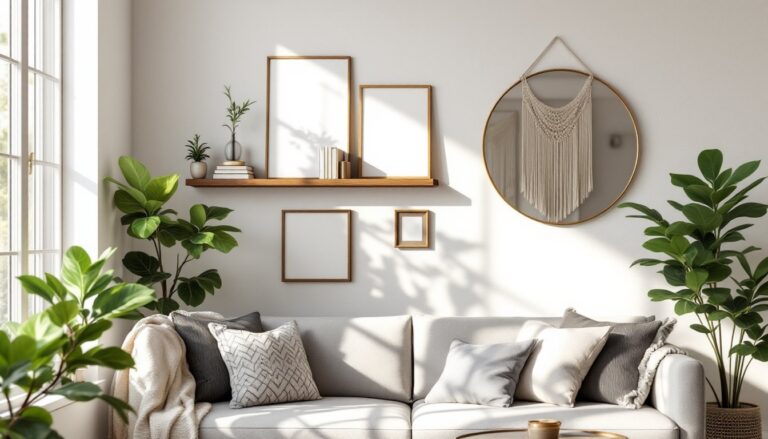


Mirrors are one of the most underrated tools in a DIYer’s arsenal. They reflect light, expand cramped rooms, and instantly elevate a living space without requiring any structural work. Whether you’re working with a cozy apartment or a sprawling great room, strategic mirror placement and thoughtful styling can transform the entire feel of the space. The best part? Most mirror projects require nothing more than a stud finder, some anchors, and basic hardware. In 2026, homeowners are moving beyond single statement pieces and embracing layered, curated approaches to mirror decor. Let’s explore practical, stylish ways to make mirrors work harder in your living room.
Key Takeaways
- Mirror wall decor ideas enhance living room lighting and perceived space by reflecting natural and artificial light while creating visual depth without structural renovation.
- Gallery walls combining multiple mirror frames in balanced sizes and finishes create visual rhythm, while symmetrical patterns require careful measuring and spacing (2-3 inches apart) for a cohesive, intentional look.
- Statement mirrors anchoring 25-40% of wall vertical space at eye level (57-60 inches from floor) serve as bold focal points that reduce the need for additional wall decor and define room personality.
- Mirror style—from modern minimalist frames to bohemian rattan and vintage ornate designs—should complement existing furniture finishes and wall colors to create intentional contrast or cohesion rather than competing aesthetics.
- Strategic placement opposite windows, in corners, and above functional furniture maximizes light distribution and spatial perception while avoiding cluttered reflections and glare from task lighting.
- Testing mirror placement with painter’s tape before permanent installation prevents costly anchor mistakes and ensures reflections enhance rather than detract from your living room’s visual appeal.
Why Mirrors Are Essential Living Room Decor
A good mirror does more than bounce light around. It creates the illusion of depth, making cramped spaces feel airier without knocking down walls or spending thousands on renovation. From a practical standpoint, mirrors bounce natural light deeper into rooms and reflect artificial light from lamps and fixtures, which reduces your reliance on overhead lighting and lowers energy costs.
Beyond function, mirrors serve an aesthetic purpose. They break up large wall expanses, create visual rhythm, and anchor furniture arrangements. A well-placed mirror can make a small sitting area feel intentional instead of cramped, or turn a blank wall into a point of interest without adding bulk.
The real advantage? Mirrors work in any style, modern, rustic, bohemian, or transitional. They’re forgiving enough for renters (using temporary adhesive strips or removable hooks) and permanent enough for homeowners planning long-term. And unlike paint or wallpaper, a mirror swap is quick when your taste evolves.
Gallery Wall Mirrors: Creating Visual Interest With Multiple Frames
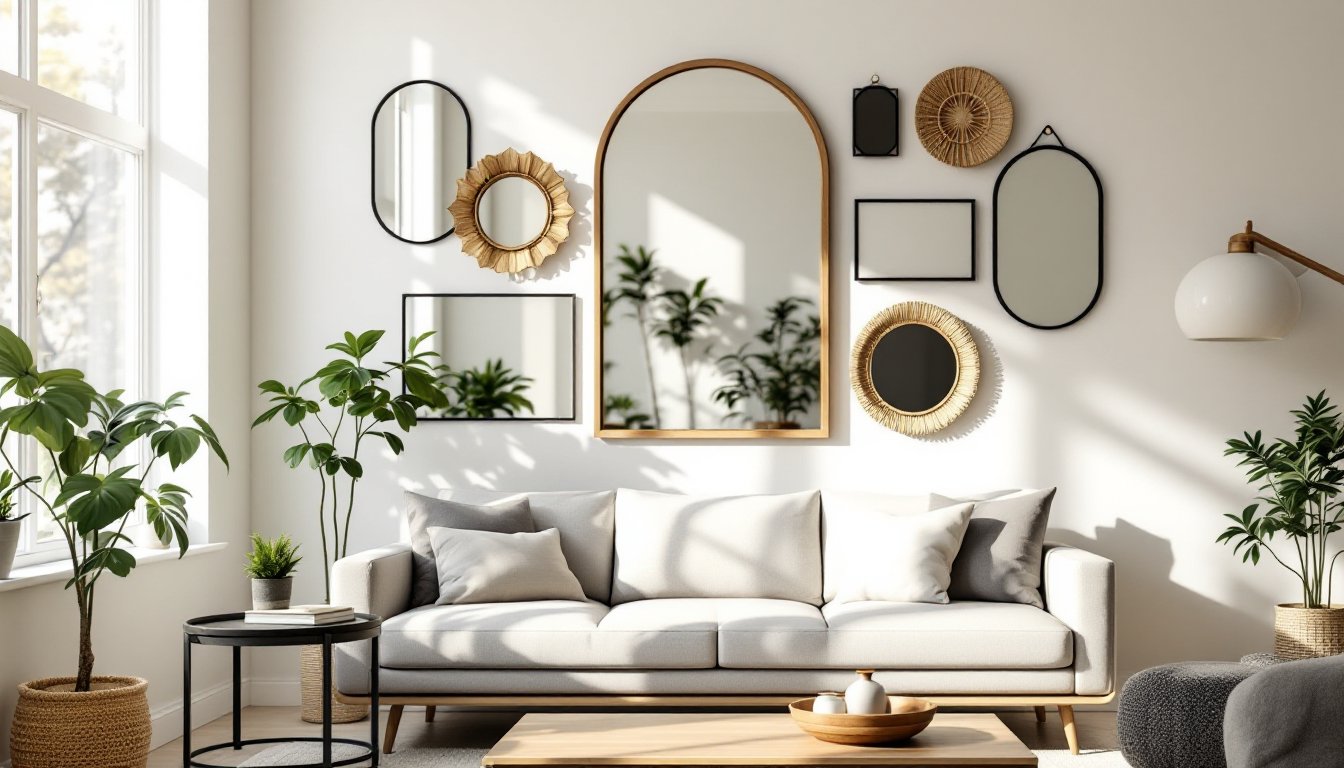
Gallery walls combine mirrors with artwork, photographs, and other wall-mounted pieces for a collected, layered look. The key is balancing different frame styles and mirror shapes, round, rectangular, and arched mirrors can coexist if anchored by a consistent color palette or frame finish.
Start by gathering frames and mirrors on the floor to test arrangements before drilling. A mix of sizes (one large piece, several medium pieces, and a few small ones) creates visual rhythm. Stick to two or three frame finishes, say, natural wood, black metal, and brass, to prevent the wall from feeling chaotic.
When it comes to hanging, lay out the entire composition with paper cutouts or painter’s tape templates first. This prevents costly mistakes and wasted anchor holes. Most gallery walls work best in living rooms above a sofa, console table, or fireplace mantel, where they become a cohesive focal point rather than random clutter.
Arranging Mirrors In Symmetrical Patterns
Symmetrical arrangements feel formal and intentional. A common pattern is a centered large mirror flanked by two identical smaller mirrors, or a 3-by-3 grid of equal-sized frames. These layouts work particularly well in traditional or transitional spaces.
For symmetrical gallery walls, measure the center point of your wall first, then work outward. Space pieces 2 to 3 inches apart for a cohesive feel. Use a level on every piece, nothing looks sloppier than a tilted mirror in an otherwise balanced arrangement.
Protip: If you’re mounting mirrors on drywall without studs, use heavy-duty drywall anchors rated for the combined weight. A single large mirror often needs two anchors minimum. Test by hanging one piece, stepping back, and adjusting before installing the rest.
Statement Mirror Designs: Making A Bold Focal Point
A statement mirror is a single, eye-catching piece that anchors an entire wall or room corner. Think a large arched mirror (48 inches or taller), an ornate sunburst design, or a sleek oversized rectangle in matte black. This approach works beautifully in rooms where one wall gets the spotlight, above a sofa, mantel, or console table.
Statement mirrors do heavy lifting aesthetically. They fill vertical space, add personality, and reduce the need for additional wall decor. A decorative wooden frame mirror in a living room becomes both functional (reflecting light) and sculptural (a design moment).
Size matters. A statement mirror should claim 25 to 40% of the wall’s vertical space from where it’s mounted. Too small, and it looks tentative. Too large, and it overwhelms furniture below. Mount it at eye level when standing, roughly 57 to 60 inches from the floor to the center of the mirror.
For renters or those hesitant about permanent installation, leaning a large mirror against the wall next to furniture is a no-drill option. A beveled mirror (with angled edges) or one with a substantial frame won’t slide as easily as a frameless glass mirror. Pair it with a piece of furniture in front to anchor it safely and prevent tipping hazards.
Decorative Mirror Styles For Every Aesthetic
Mirror style communicates the room’s personality as much as color or furniture choices. The frame finish, shape, and overall design set the tone.
Modern, Vintage, And Bohemian Mirror Options
Modern mirrors feature clean lines, minimalist frames, and often geometric shapes. A slim matte-black steel frame or a brushed-brass rectangular mirror fits seamlessly into contemporary spaces. Modern designs prioritize function over ornament.
Vintage and transitional mirrors embrace carved wood frames, ornate details, and classic shapes like rounds or ovals. A mirror with a gold-leafed wood frame adds warmth and works well in traditional or eclectic spaces. These pieces age beautifully and feel timeless rather than trendy.
Bohemian mirrors lean into rattan frames, macramé accents, or natural wood with irregular edges. Oversized woven frames have surged in popularity and pair perfectly with plants, textiles, and earthy palettes. A rattan-framed round mirror in a living room adjacent to a woven pendant light and natural fiber rug creates cohesion.
Industrial mirrors use metal frames, steel, iron, or galvanized finishes, often with exposed hardware or rivets. These suit loft-style spaces and modern farmhouse aesthetics.
When choosing a style, consider your existing furniture and wall color. A mirror frame should either match metal hardware in the room (lighting, shelving) or provide intentional contrast. A brass-framed mirror against a neutral wall pops: too many competing finishes muddy the space.
Strategic Mirror Placement To Maximize Light And Space
Placement determines whether a mirror enhances or wastes its potential. The goal is reflecting light toward dark corners and creating sightlines that make rooms feel bigger.
Opposite windows: A mirror placed across from a window (or to its side) bounces natural light deeper into the room and makes it feel brighter without additional fixtures. Avoid placing mirrors directly behind reading lamps or task lighting, as reflections can create glare.
Corner placement: A mirror in a corner expands the perceived space. The eye follows the reflected corner, and the room feels wider. This is especially useful in small living rooms or awkward alcoves.
Above functional furniture: Mirrors above consoles, sideboards, or mantels create visual weight and anchor the space. They also reflect what’s below them, adding visual interest without cluttering the floor.
Wall color matters: A mirror on a dark accent wall reflects that color, which can feel heavy. Light, neutral walls make mirrors feel more spacious and reflective. If you have a bold accent wall, hang mirrors on neutral walls instead.
Hang at the right height: For a single focal mirror, center it at 57 to 60 inches from floor to mirror center. For gallery walls, the center of the entire composition should land around 60 inches. This aligns with typical eye level and creates balanced proportions.
Avoid direct reflections of clutter: Don’t hang a mirror where it reflects a cluttered corner, unmade bed, or TV. Position it to reflect windows, artwork, or an open, clean area of the room.
Test placement before committing. Use painter’s tape to outline the mirror shape on the wall and live with it for a few days. You’ll quickly notice if it’s catching awkward reflections or if natural light flow improves as expected.