

High ceilings are a blessing, until someone realizes the space feels cold, echoing, or somehow incomplete. A cavernous living room can overwhelm rather than impress if the design doesn’t account for all that vertical real estate. The key is using that height strategically: anchoring the room with deliberate decor, lighting, and furnishings instead of leaving it to feel hollow. This guide walks through proven tactics for high ceiling living room decor ideas that homeowners can carry out themselves or use to direct a designer. From wall art placement to layered lighting and statement furniture, these approaches transform soaring ceilings from a liability into your room’s strongest asset.
Key Takeaways
- High ceiling living room decor ideas require strategic use of vertical space through wall art, layered lighting, and properly scaled furniture to prevent the room from feeling cavernous or cold.
- Install gallery walls 8–10 feet high with statement art pieces 36–48 inches tall, or use floor-to-ceiling bookshelves to visually anchor tall walls and break up blank vertical space.
- Layer multiple light sources at different heights—including statement chandeliers 18 inches below the ceiling, wall sconces at eye level, and task lighting—to add warmth and prevent the overhead glow from dissipating into the void.
- Choose oversized furniture and architectural elements like exposed beams, wainscoting, or crown molding to command presence and ground the room without requiring major renovation.
- Use warm neutrals, textured textiles, floor-to-ceiling curtains, and natural wood tones to absorb light and sound while creating a cozy atmosphere that complements the room’s height.
Maximize Vertical Space With Strategic Wall Decor
The biggest mistake with high ceilings is treating walls like they’re a standard eight feet tall. Gallery walls, oversized art, and tall shelving installed strategically break up blank vertical space and draw the eye purposefully across the room rather than letting it bounce around.
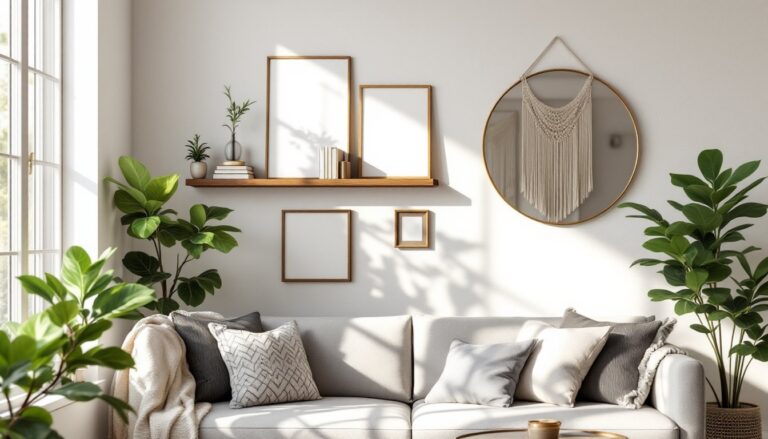
Install a gallery wall between eight and ten feet high instead of the typical six-foot range. This placement fills the space without making the room feel smaller, counterintuitive, but it works because your brain anchors to the grouped art rather than the void above it. Use a mix of frame sizes and matting styles: consistency matters less than intentional spacing. Leave two to three inches between frames for a modern gallery feel, or butt them closer for a salon-style hang.
For single large artworks, consider pieces that are 36 to 48 inches tall. A single statement painting at this scale commands attention and acts as a focal point that prevents the eye from traveling aimlessly upward. Mount it at the standard 60 inches from the floor to the center of the piece, this height works regardless of ceiling height.
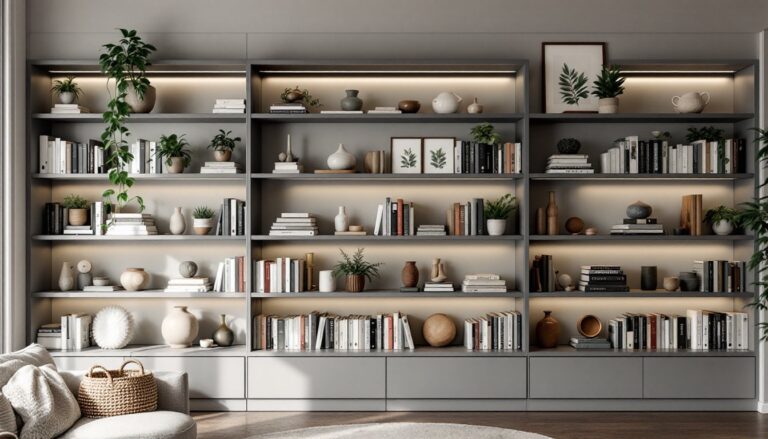
Flooring-to-ceiling bookshelves and built-in shelving run vertical lines that visually anchor the room. If built-ins aren’t in your budget, tall bookcases (80 inches or higher) positioned against walls achieve the same effect. Style shelves with a mix of books, decorative objects, and negative space: overstuffing defeats the purpose. Vertical wall-mounted collections, such as plates, textiles, or even a shiplap accent wall painted a warm neutral, also segment the space without crowding it.
Choose The Right Lighting To Anchor The Room
Lighting is non-negotiable in a high ceiling room. Ambient light that dissipates across 12 feet of vertical space loses punch: layering multiple light sources at different heights solves this problem and creates visual depth.
Pendant And Chandelier Options
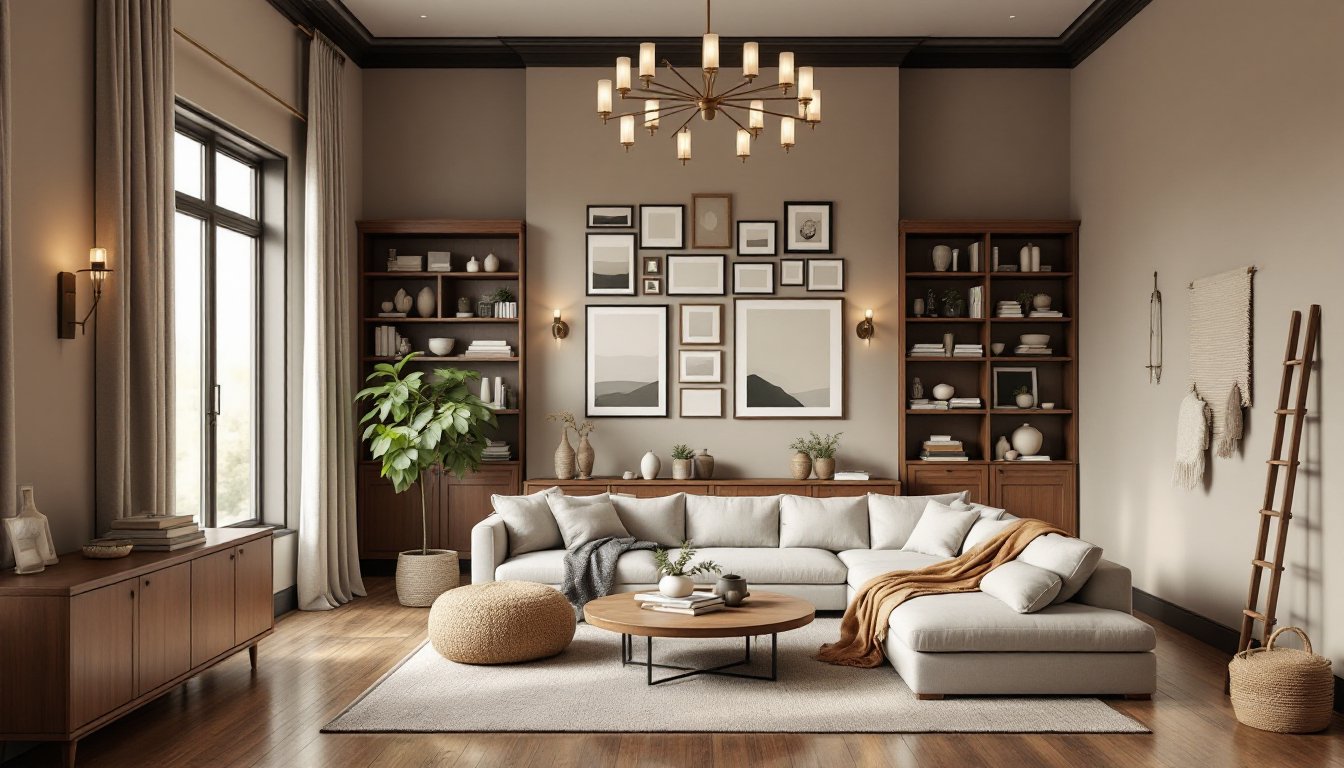
A statement chandelier or pendant hung at the right height is the room’s anchor. Install the fixture 18 inches below the ceiling if you have 9 feet or less, or position it to float 7 to 8 feet above the floor in taller rooms. This keeps it visually grounded rather than disappearing into the ceiling. Oversized chandeliers (36 to 48 inches in diameter) fill the space without looking undersized: a tiny light fixture will accentuate how big the room is.
Pendants work equally well, especially clusters of three hanging at staggered heights. This approach breaks the monotony of a single centered fixture and adds contemporary flair. Wrought iron, aged brass, and matte black finishes suit high ceilings better than chrome, which can feel cold in large spaces.
Use Layered Lighting For Ambiance
Don’t rely on overhead lighting alone. Install wall sconces at eye level (roughly 60 to 66 inches high) on either side of artwork or on flanking walls. These add warmth and reduce the glare of a single bright source bouncing off high ceilings. Floor lamps positioned in corners also contribute light while anchoring distant areas of the room.
Task lighting, table lamps on side tables or console lamps on floating shelves, provides functional illumination and visual interest. Consider fixtures with dimmable LED bulbs (2700K color temperature for warmth) so you can adjust ambiance without installing new wiring. Smart bulbs allow you to shift lighting on the fly, a practical touch for living rooms that serve multiple purposes.
Add Statement Furniture And Architectural Elements
Furniture scale matters enormously in high ceiling spaces. Standard six-foot sofas disappear visually: opt for deeper seating or an oversized sectional (96 inches or wider) that commands presence. Pair it with substantial side tables, credenzas, or console tables in solid wood or metal frames rather than slender, floating designs.
Architectural elements ground a room faster than any accessory. Exposed beams (real or faux), wainscoting, or shiplap installed at five to six feet create a visual ceiling line without lowering the actual one. Crown molding updates instantly, choose crown at least 4 inches tall: anything smaller reads as insubstantial in a tall room.
Floating shelves installed at different heights create depth and break vertical monotony. Install one at 48 inches, another at 72 inches, and a third at 96 inches if your room permits. Style them with varying object heights, tall vases or artwork alternating with stacks of books, so the eye moves naturally across them. Avoid symmetrical, matched placement: asymmetry feels intentional and modern.
A tall room divider, decorative ladder, or even a second TV wall mounted higher than the primary sitting area adds purposeful architectural interest. These elements don’t require renovation: they simply maximize the volume you already have.
Create Visual Interest With Color And Texture Combinations
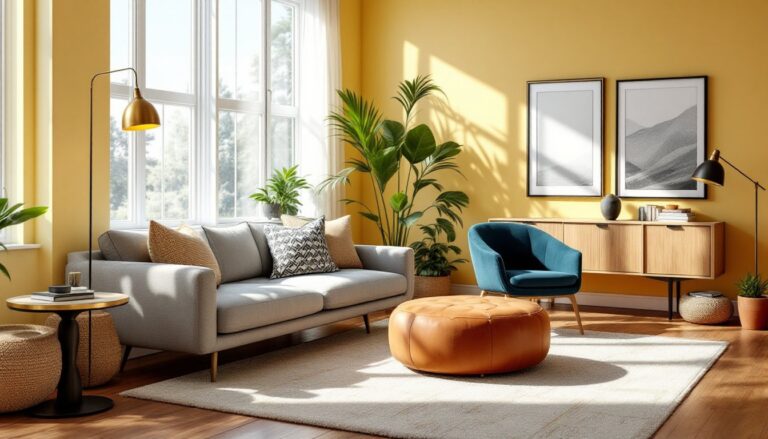
Monochromatic or pale walls feel sparse in high ceilings. Instead, embrace warm neutrals (warm grays, taupes, soft terracotta) or muted jewel tones that absorb light without making the room feel smaller. Paint the ceiling a shade one to two degrees darker than your walls, this subtle definition makes the ceiling feel lower and the room cozier without the obvious effect of a dark ceiling.
Textural variety prevents the room from feeling sterile. Layer area rugs (a large base rug 9 by 12 feet minimum, topped with a smaller runner for visual interest), upholstered furniture in linen or leather, and natural fiber accents like jute baskets or woven wall hangings. These surfaces absorb sound in a high-ceilinged room, which can echo, and they add warmth that hard surfaces alone can’t deliver.
Textiles, throw blankets, curtains in natural linen or linen-cotton blends, and patterned pillows, introduce softness and pattern without overwhelming. Floor-to-ceiling curtains hung from near the ceiling to the floor create continuous vertical lines that make the space feel intentionally tall rather than accidentally cavernous. Heavy curtains in rich fabrics (velvet, textured linen) perform double duty: they insulate, dampen sound, and look substantial enough for the scale.
Wood tones warm a big room. Incorporate natural wood furniture, exposed shelving, or a fireplace mantel in walnut or oak. Mix warm and cool metallics (aged brass with matte black, for instance) rather than sticking to one finish, contrast makes a room feel designed rather than decorated.
Conclusion
High ceiling living rooms aren’t a design problem, they’re an opportunity. Homeowners who use vertical space strategically with art placement, layered lighting, appropriately scaled furniture, and warm color palettes transform empty space into sophisticated, inviting rooms. Start with one or two changes, a statement light fixture and a tall bookcase, for example, then add more intentional elements as you refine your vision. The goal is always to draw the eye inward and downward, making the room feel complete and purposeful rather than hollow.