

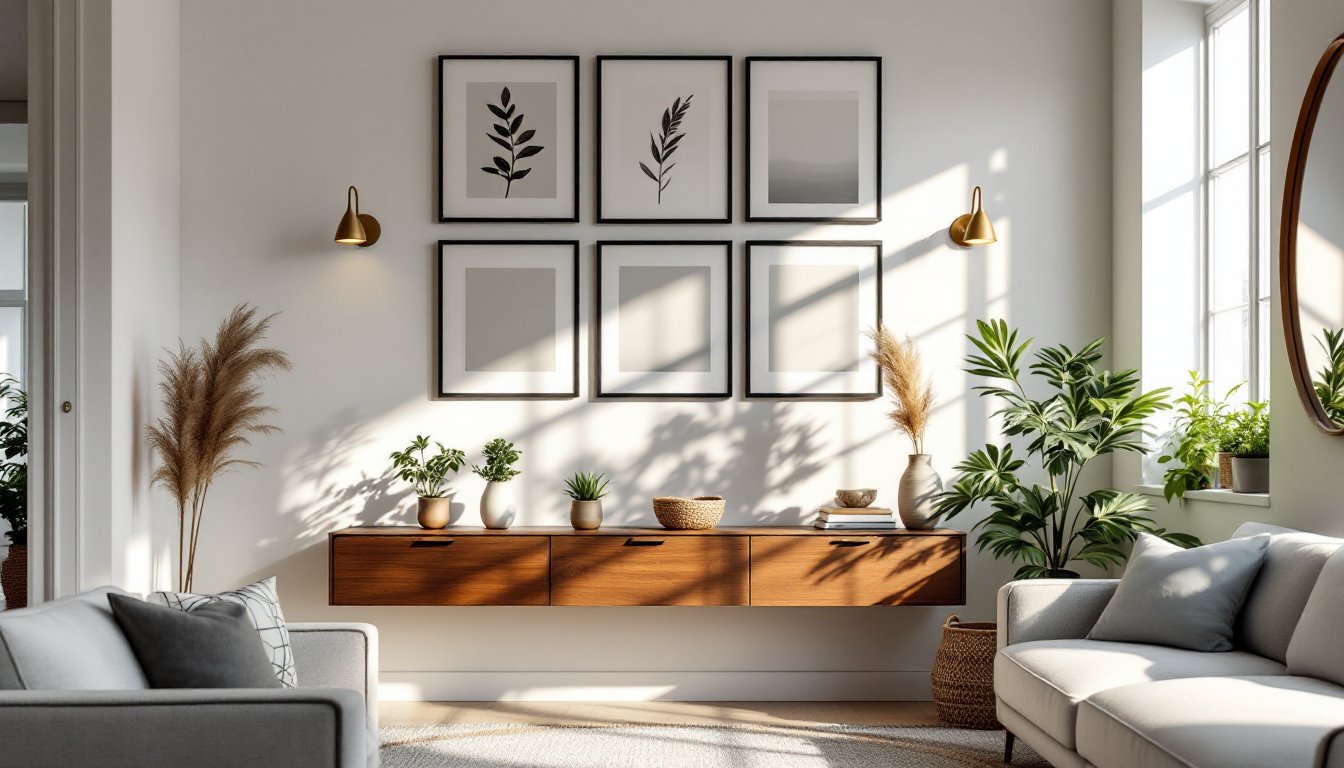
Living room walls are prime real estate, blank canvas waiting to reflect personality and pull a room together. Whether a homeowner is refreshing a dated space or moving into a new place, wall decor sets the tone for comfort and style without requiring a full renovation. The good news: most living room wall projects are straightforward enough for DIYers to handle solo, demand minimal tools, and won’t break the budget. This guide walks through practical, achievable wall decor ideas that actually work in real living rooms, not just magazine spreads.
Key Takeaways
- Simple living room wall decor projects like gallery walls, floating shelves, and accent paint can transform your space in a weekend without professional help.
- Proper planning—laying out frames on the floor, locating studs with a stud finder, and marking nail holes before hanging—prevents mistakes and ensures a polished, intentional look.
- Floating shelves must be anchored directly to wall studs using heavy-duty brackets rated for 30+ pounds; relying on wall anchors alone will eventually fail and pose safety risks.
- An accent wall using deeper colors, jewel tones, or bold hues redefines a room’s visual focus when positioned strategically behind seating or facing the entrance.
- Natural textures like woven wall hangings, macramé, shiplap, and dried botanicals add warmth and acoustic benefits that flat décor cannot match, especially when paired with minimalist furniture.
- Wall sconces and string lights offer functional ambiance with string lights providing a low-commitment plug-in alternative, while sconces may require professional electrical installation depending on local codes.
Why Wall Decor Matters in Your Living Room
Walls occupy roughly 60% of the visual space in any room, yet many homeowners treat them as an afterthought. Done right, wall decor anchors the entire space, it can make ceilings feel taller, add warmth to cold corners, or visually expand a compact layout. Beyond aesthetics, wall treatments absorb sound and hide imperfections, making the room feel more polished and intentional.
The living room is the gathering space, the backdrop for TV binges and dinner conversations. Unlike a bedroom or office, it handles high traffic and needs decor that’s durable and timeless. Starting with a clear vision, whether that’s modern minimalist, cozy eclectic, or classic, helps prioritize which wall projects matter most and saves wasted time on trends that won’t age well.
Gallery Walls: Creating Impact Without Clutter
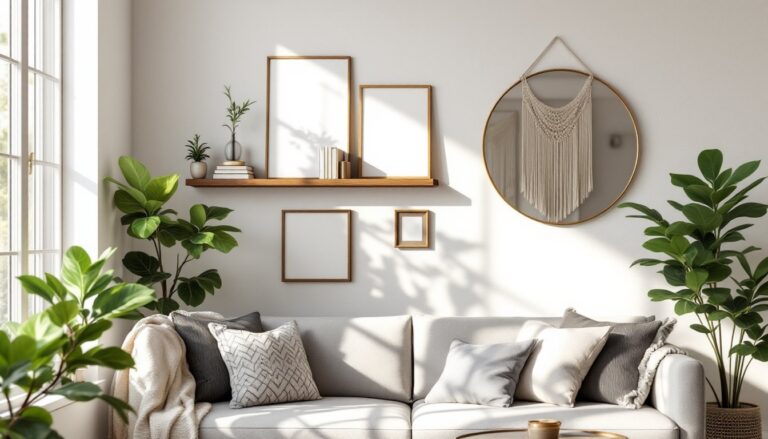
Gallery walls turn blank surfaces into curated displays. The trick is planning before hammering, a hodgepodge of mismatched frames reads as chaotic, while a thoughtful layout feels intentional.
Planning the layout:
- Lay frames and artwork on the floor in the desired arrangement.
- Measure the overall width and height of the grouping.
- Find the center point on the wall and mark lightly in pencil.
- Use a level and ruler to ensure frames are square and spaced evenly (typically 2–3 inches apart).
- Mark nail holes with a pencil before driving nails.
For a cohesive look, stick to 3–4 complementary frame colors and mix portrait and landscape orientations. Vary art styles (photography, prints, watercolor) but keep the color palette consistent, monochrome, jewel tones, or pastels all work depending on room tone.
Material notes: Use finish nails (1 to 1.25 inches) for drywall: for plaster or masonry, drill pilot holes and use anchors rated for frame weight. A stud finder removes guesswork and ensures heavier pieces don’t sag. Pro tip: take a photo of the floor layout before hanging, reference it if pieces shift.
Floating Shelves for Style and Function
Floating shelves deliver style and storage without visual bulk. Unlike traditional shelving, they appear to defy gravity, creating a modern, clean line on the wall.
Installation essentials:
Floating shelves mount on hidden brackets anchored directly to wall studs, don’t skip this step. Use a stud finder to locate studs, which sit 16 inches on center in standard framing. Mark stud locations lightly in pencil.
- Install heavy-duty brackets (capable of holding 30+ pounds per shelf) into studs using 3-inch wood screws or lag bolts.
- Set the shelf’s height using a level: account for ceiling height and furniture below.
- Secure the shelf to brackets and ensure it’s perfectly level before loading items.
Wall anchors alone won’t support floating shelves safely, that’s a common mistake. Load limit varies by bracket quality and wall type, so verify manufacturer specs. Styrofoam, drywall, or plaster without stud support will eventually fail and could injure someone below.
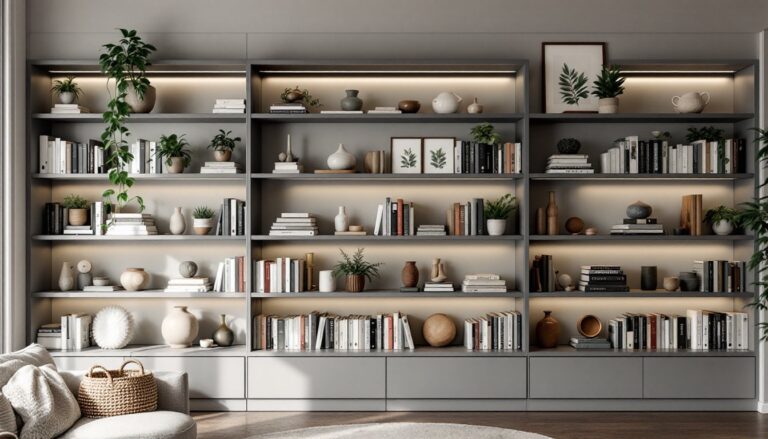
Style-wise, style shelves with a mix of books, small plants, and decor objects. Asymmetry looks intentional: perfect symmetry reads as stiff. A floating shelf works especially well above a console table, couch, or accent wall.
Paint Accents and Wallpaper Solutions
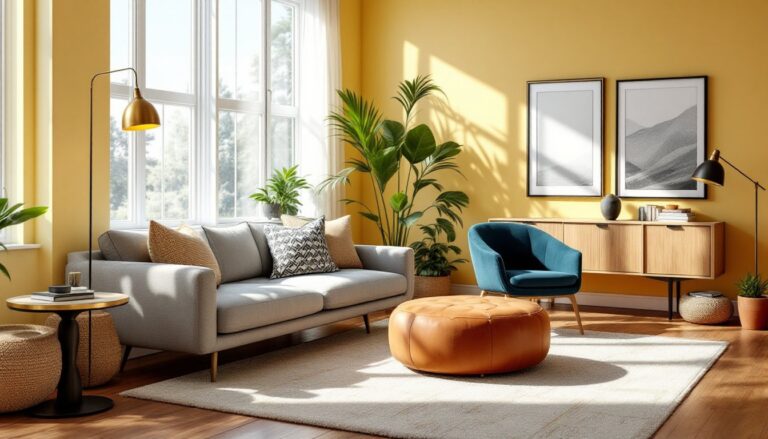
A single accent wall redefines a room without the commitment of painting all four sides. Deeper colors, jewel tones, or bold hues draw the eye and create depth.
Accent wall best practices:
Choose the wall that draws natural focus, typically the one facing the entrance or behind seating. Lighter walls recede: darker walls advance, so position color strategically. Apply primer first, especially over existing paint or if switching from light to dark: standard drywall primer costs $15–25 per gallon and prevents bleed-through.
Paint coverage runs roughly 350–400 square feet per gallon. Two coats are standard: some bold colors need three. Quality matters, mid-range paint ($25–35 per gallon) offers better durability and coverage than budget brands.
Wallpaper is a faster alternative for renters or those hesitant about paint commitment. Peel-and-stick wallpaper requires zero prep but won’t handle high-humidity rooms. Traditional wallpaper demands proper surface prep (smooth, clean, primed walls), adhesive application, and booking time (30 minutes of overlap saturation) before hanging. The payoff: texture, pattern, and a finished look that feels tailored.
Wallpaper seams are visible if not sealed properly: a smoothing tool and vinyl adhesive prevent bubbles and peeling. Start in a corner, work toward the center, and use a plumb line to keep edges straight.
Natural Elements and Textures
Woven wall hangings, macramé, and fiber art add warmth and organic appeal without being overly trendy. These pieces absorb sound, soften hard edges, and bring tactile interest that flat décor can’t match.
Texture options:
- Wooden wall panels or shiplap add rusticity: pre-cut boards mount horizontally or in herringbone patterns. Expect 4–8 hours for a single accent wall and basic carpentry skills (circular saw, drill, level).
- Woven baskets hung at varying heights create a gallery effect with softer lines than frames.
- Dried grasses, pampas, or branches in tall vases or framed shadow boxes bring botanical interest for minimal cost and effort.
- Cork or fabric wall tiles provide acoustic benefits and a natural finish: they peel-and-stick or adhere with construction adhesive.
Installation: Most natural elements hang on picture hooks or anchor mounts rated for their weight. Cork and fabric tiles need clean, dry walls: skip them in kitchens or bathrooms where humidity causes adhesive failure.
The key is balance, too many textures feel cluttered. Pair one major textured element (a large woven hanging or wooden accent) with simpler décor around it. Natural elements also work well paired with modern or minimalist furniture, adding contrast without clash.
Lighting as Decor: Wall Sconces and String Lights
Wall-mounted lighting transforms ambiance and adds functional style simultaneously. Sconces flank mirrors, light reading nooks, or create symmetry above a console table.
Installation overview:
Wall sconces require electrical work, specifically, running wire to a light switch and junction box. Depending on local codes, this may require a licensed electrician (especially if hiding wire behind walls). Check local electrical codes before starting: improper installation risks fire hazards.
- Turn off power at the breaker before any work.
- Use a stud finder and non-contact voltage tester to locate studs and confirm power is off.
- Mount the sconce bracket into studs when possible: if not, use heavy-duty wall anchors rated for the fixture’s weight.
- Connect wire per the fixture instructions: this step typically requires a pro unless the homeowner has electrical experience.
String lights (fairy lights, bistro lights) offer a low-commitment alternative. They plug into outlets and drape along walls, frames, or shelves. Warm white bulbs feel cozier than bright white: battery-operated options eliminate cord visibility. Drape them loosely for romance, tightly for geometric patterns.
Dimmable sconces and string lights on timers add luxury feel and practical mood control. A single pair of sconces costs $40–150: professional installation adds $100–300 per light depending on wiring complexity.
Conclusion
Living room wall decor doesn’t require designer skill or expensive contractors. Gallery walls, floating shelves, paint, natural textures, and strategic lighting each offer different levels of effort and impact. The best approach combines one or two focal-point ideas, perhaps an accent wall and floating shelves, rather than overwhelming the space. Start simple, measure twice, prep surfaces properly, and invest in quality hardware. Most projects finish in a weekend, cost under $300, and transform the room’s entire feel.