

A dedicated home movie theater isn’t just about the screen and speakers, it’s about creating an immersive environment where the outside world disappears and the story on screen becomes everything. The difference between watching a film on a living room couch and experiencing it in a properly designed home theater comes down to thoughtful decor choices: lighting that kills glare, walls that control sound, colors that enhance focus, and seating that keeps viewers comfortable for the long haul. Whether someone is converting a basement corner or building from scratch, nailing the foundational decor elements before adding the tech makes all the difference. This guide breaks down the key design decisions that transform a regular room into a theater space that rivals the commercial experience, without the sticky floors or overpriced snacks.
Key Takeaways
- Home movie theater decor foundations—lighting, acoustics, color, and seating—matter far more than expensive AV equipment for creating an immersive viewing experience.
- Install 100% blackout curtains, bias lighting, and dimmable LEDs on a separate circuit to eliminate glare and set the cinematic mood without interfering with screen contrast.
- Use dark gray, charcoal, or black walls with matte finishes below 20% reflectance, paired with acoustic panels and corner bass traps to control sound and eliminate echoes.
- Calculate optimal viewing distance (1.2× screen width) and choose reclining theater seating with at least 30–36 inches per seat to ensure comfort during long viewing sessions.
- Arrange seating in a slight arc with offset tiered rows to eliminate head obstruction and neck strain from side seats.
- Incorporate small accent lighting, wall-mounted shelving, and practical accessories like popcorn makers to complete the theater aesthetic while maintaining focus on the screen.
Lighting Design That Sets the Perfect Cinematic Mood
The biggest decor mistake people make in home theaters is leaving standard ceiling lights in place. Even dimmed, they wash out contrast and pull focus from the screen. A proper lighting plan means layers, and the ability to kill every light source except the screen.
Eliminate ambient light first. Install heavy blackout curtains or motorized roller shades rated for light blocking (look for those marked 100% blackout). Mount them floor to ceiling on any windows. Gaps around window frames leak light: weatherstripping or blackout panels behind curtains seal those leaks. If the room has doors, use door sweeps and threshold seals.
For actual lighting, install dimmable recessed LED downlights on a separate circuit from the overhead fixture. Warm white LEDs (2700K color temperature) are more comfortable than cool white and won’t interfere with the screen’s color accuracy. Position them to bounce off side walls rather than pointing at seating, indirect light feels cinematic. Add bias lighting behind the screen: a thin LED strip (4000K to 5000K) reduces eye strain during long viewing sessions by matching the screen’s light output to the wall behind it.
Consider accent lighting along baseboards or shelving, it guides people safely through the dark without drawing attention. Wireless, battery-powered under-cabinet LEDs work well and avoid extra wiring. All dimmers and switches should use silent technology (not mechanical) to avoid electrical buzzing that sound-conscious viewers notice immediately.
Set up a master control: a single dimmer or smart home button that transitions the room from prep mode to movie mode in one step. Automating this removes fumbling in the dark and keeps the experience seamless.
Acoustic Treatments and Wall Finishes
Hard, reflective surfaces, drywall, concrete, tile, bounce sound around the room, creating echoes and muddiness that kill dialogue clarity. Acoustic treatment doesn’t mean covering walls in foam. Smarter solutions look better and work harder.
Fiberglass insulation panels wrapped in fabric absorb mid-to-high frequencies where most voices live. Standard dimensions are 2 feet by 4 feet by 4 inches thick, mounted at ear level and above seating areas. Hardwood-framed panels ($80–$200 each) fit a theater aesthetic better than exposed foam. Place them asymmetrically, three on one side, two on another, rather than in a grid, which can look institutional and actually creates acoustic dead zones.
For the walls behind and beside the screen, apply textured acoustical drywall or fabric panels rather than smooth drywall. This breaks up reflections without eating as much sound as heavy absorption. Bass traps in room corners (thick, rigid fiberglass in corner-mounted boxes) tame low-frequency rumble that standard absorption can’t touch.
The ceiling matters too. Drop it 3–4 inches and fill the cavity with unfaced fiberglass batts, then install perforated acoustic tiles ($1–$3 per tile). This absorbs overhead reflections that people often overlook. Avoid popcorn or sprayed textures, they’re outdated and collect dust that acoustic gear shouldn’t.
Paint color affects acoustics slightly: darker colors absorb light, which people associate with sound dampening, but technically the finish (not the color) does the work. Matte finishes over acoustical treatments beat glossy every time. Use quality primer and at least two coats of paint rated for humidity (basements need moisture-resistant products).
Choosing the Right Color Palette for Theater Ambiance
Color psychology in home theater is straightforward: darker, desaturated tones train the eye on the screen, while bright or warm walls compete for attention.
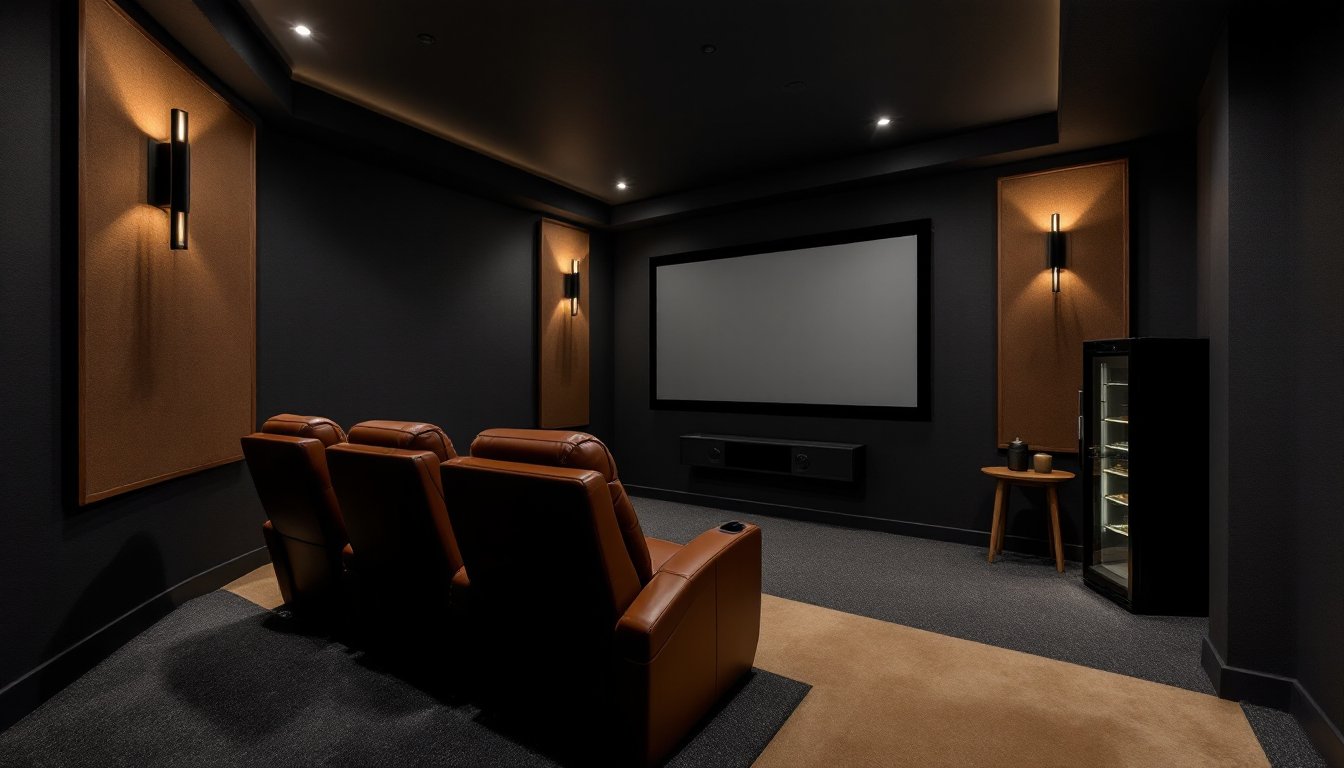
Walls should be dark gray, charcoal, or true black. Not movie-poster red or accent colors, those distract. A reflectance value (sheen or light reflection percentage) below 20% is ideal: check paint specs for this. Flat, matte finishes hide imperfections and reduce glare better than eggshell or satin. Brands like Benjamin Moore’s Ultra Flat or Sherwin-Williams Pro Classic in flat sheens work well and withstand humidity better than budget paint.
Lighting designers recommend contrast between the screen wall and side walls. If the screen wall is black, side walls can be dark gray (around 15–20% lighter). This subtle difference helps eyes settle on the center without obvious color blocking.
Ceiling color is underrated. A dark gray or black ceiling ($3–$8 per gallon for good quality) disappears into shadow and doesn’t bounce light back down. Don’t skimp on coverage here, plan for 250–300 square feet per gallon (actual application, not marketing coverage) on textured ceilings.
Floor color is functional: lighter tones (light gray, tan) help people navigate the dark without tripping. They also provide visual separation from walls, keeping the eye from feeling trapped. Carpet in dark tones hides popcorn salt and is forgiving with spilled drinks, practical and aesthetically neutral.
Accent color (if any) should appear only in small doses: a frame around artwork, trim on acoustic panels, or decorative elements. Restraint keeps focus on the screen.
Comfortable Seating Arrangements and Layout
Seating is where people spend hours, so comfort drives the entire space. Decor fails when seating doesn’t match the room dimensions or viewing distance.
Calculate the viewing distance first. For 4K screens, the ideal viewing distance is roughly 1.2× the screen width. A 75-inch TV works best at about 9 feet: a 65-inch at 7.5 feet. Larger screens and smaller rooms mean closer distances, which is fine for modern displays. Measure this before choosing seating or finalizing the layout.
Raisedtier seating (stadium-style rows with elevated back seating) eliminates head obstruction and looks intentional. If building a single row, position it 8–10 feet from the screen. Each seat needs at least 30 inches of width: recliners need 36 inches. Leave 18 inches minimum between rows for people to pass and recline.
Reclining theater seating ($400–$1200 per seat) is the standard for dedicated rooms. Manual recliners are reliable: power recliners add convenience but introduce moving parts that fail. Look for frames rated for repeated use (durable hardwood or steel), cup holders integrated into armrests (not an afterthought bolted on), and headrests that stay put during reclining. Leather or performance fabric (stain-resistant, durable microfiber) beats standard upholstery for spill mishaps.
Arrange seating in a slight arc facing the screen, not a perfect semicircle, which strains neck viewing from side seats. Offset rows slightly so back-row viewers see between front-row heads.
Accessories and Finishing Touches
Once the big pieces are in place, accessories seal the theater vibe. Install wall-mounted shelving for media equipment (AV receiver, streaming boxes, cable management). Paint shelves dark to hide clutter or use cable raceways to organize wiring behind them. Add a small side table beside seating for remotes, snacks, and drinks.
Industrial-style sconces ($50–$150 each) flanking the screen provide soft task lighting for setup without the overhead glare. Mount them 12–18 inches to either side of the screen frame, angled slightly downward.
Acoustic panels can double as decor: frame them in real wood (walnut, oak) instead of cheap plastic trim, or wrap fabric in designer patterns that complement the dark palette. Art prints in black frames add personality without breaking the minimalist focus.
A simple popcorn maker or beverage fridge ($200–$600) brings the cinema home functionally and aesthetically. Position it on a cart or stand so it’s accessible but out of the main sightline.
Tell people upfront: this room is noise-sensitive and light-controlled. A small sign on the door keeps guests from flipping light switches during movies.
Conclusion
Building a home movie theater isn’t about buying the most expensive TV or fanciest speakers. It’s about controlling the fundamentals: darkness, sound clarity, colors that recede, and seating that keeps people comfortable. These decor choices cost far less than premium AV gear but create the foundation everything else depends on. Nail the lighting, acoustics, color scheme, and layout first, the tech plugs into a well-designed space, not the other way around. A thoughtfully decorated theater room becomes the place people actually want to spend time in.